

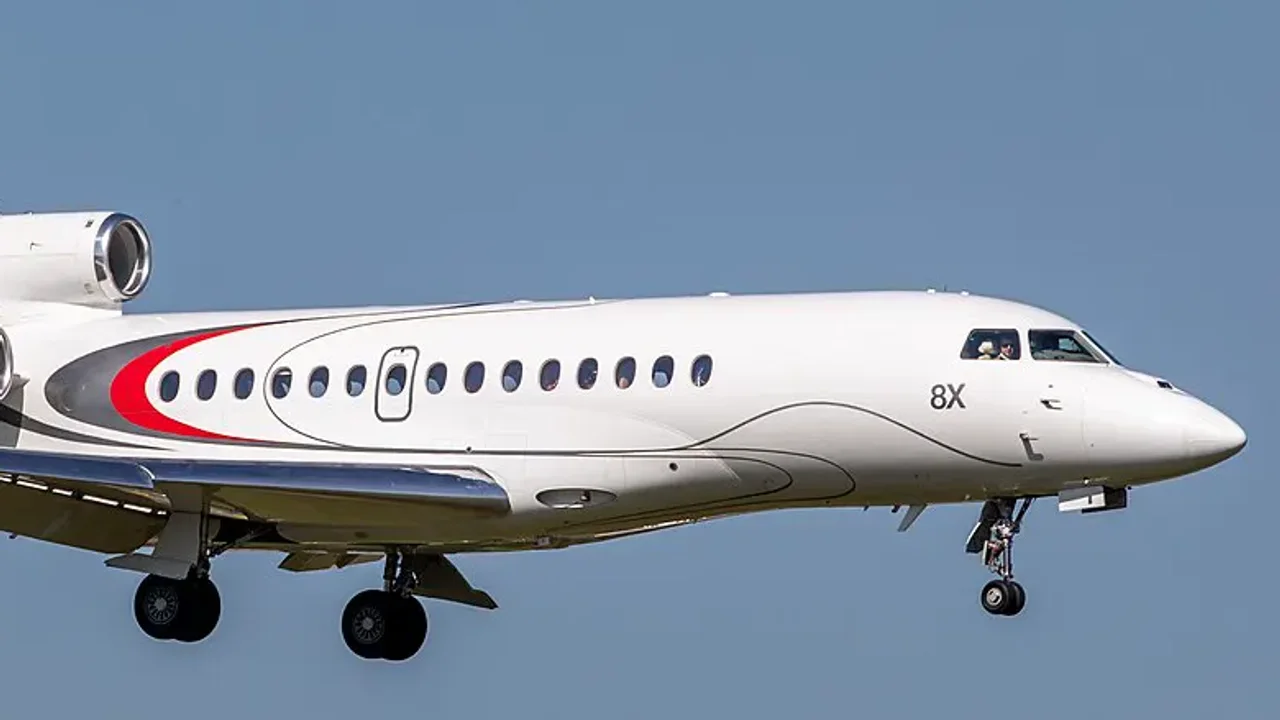
You can smoke on a private jet only if the charter operator allows it, and most do not. The federal smoking ban in 14 CFR Part 252 exempts on-demand charter flights where no flight attendant is required, so the decision rests with the operator. Smoking in the lavatory is always prohibited, and the FAA says vapes must never be used or charged on board.
Key takeaways
- Smoking is legal on some charter flights, but rare. The federal ban exempts on-demand air taxi flights that do not need a flight attendant, and the operator sets the policy.
- Most operators and owners say no, mainly because smoke lingers in the cabin and the next customer will notice.
- Vapes and e-cigarettes cannot be used or charged on any aircraft, according to the FAA.
- Never smoke in the lavatory. It is prohibited on every charter flight, and tampering with a smoke detector is a federal offense.
- Ask before you book if smoking matters to you, and get any permission in writing.
Can you smoke on a private jet?
Yes, in limited cases, but only with the operator's permission. The Department of Transportation's smoking rule, 14 CFR Part 252, requires US airlines to ban smoking on scheduled flights and on most nonscheduled flights. It makes two exceptions for flights where a flight attendant is not a required crew member: single entity charters and on-demand services of air taxi operators. That covers most private jet charters, because aircraft with 19 or fewer passenger seats do not need a flight attendant.
The same rule adds that nothing in it requires an operator to permit smoking. In practice, the operator decides, and the answer is usually no.
Part 252 also defines smoking broadly. It includes tobacco, electronic cigarettes and "similar products that produce a smoke, mist, vapor, or aerosol," with an exception for medical devices such as nebulizers.
Why do most operators ban smoking?
Because the aircraft is a shared, expensive cabin, and smoke does not leave it. A charter aircraft flies different customers every week, and many are also flown by their owners. Smoke settles into leather seats, carpets and headliners, and the next passengers will notice it.
Operators also have practical reasons:
- Cleaning and odor removal can take the aircraft out of service, and the cost may be passed on to you.
- Owner rules. Many charter aircraft are managed for private owners, who often forbid smoking on their aircraft.
- Fire safety. Any open flame or hot ash in a small cabin is a risk, and crews prefer to remove it entirely.
If the operator does allow smoking, expect conditions, such as only during cruise, only certain products and a charge for cleaning afterward. Our guide to repositioning, overnight and other charter fees explains how extras like cleaning appear on a quote.
Can you vape on a private jet?
No. The FAA treats electronic smoking devices as dangerous goods because their lithium batteries can cause smoke, fire and extreme heat. Its PackSafe guidance on vapes says passengers should keep them in the cabin, not in checked baggage, and that they "must never be used or charged in the aircraft." The FAA adds that vapes were the leading cause of lithium battery incidents on aircraft in 2022.
So, even on a flight where the operator allows cigarettes or cigars, plan on keeping your vape switched off and stored in your carry-on.
The same caution applies to lighters. Under the FAA's lighter rules, passengers may carry one butane or absorbed-liquid lighter in carry-on baggage or on their person, and lithium battery lighters only in carry-on with protection against accidental activation.
What do federal rules say about smoking on charter flights?
Three rules apply on every Part 135 charter flight, whatever the operator's policy.
- Follow the signs and the crew. Under 14 CFR 135.127, no one may smoke while a "No Smoking" sign is lit or "No Smoking" placards are posted.
- Never in the lavatory. The same rule prohibits smoking in any aircraft lavatory, and lavatories with smoke detectors must carry a placard warning of a federal penalty of up to $2,000 for tampering with the detector.
- Listen to the briefing. Under 14 CFR 135.117, the pilot in command must brief passengers before each takeoff on when, where and under what conditions smoking is prohibited.
Pilots on on-demand flights may allow smoking on the flight deck only in limited cases, and never while the aircraft is moving on the ground or during takeoff and landing. In practice, few crews do.
Cigars, cigarettes and special requests
If smoking is important for your trip, raise it at the quote stage, not on the day. A few tips:
- Ask the broker or operator directly whether any aircraft available for your route permits smoking. The answer will usually be no, but some owners do allow it.
- Get permission in writing on the quote or charter agreement, including any conditions and cleaning charges.
- Expect fewer options. Limiting yourself to aircraft that allow smoking can mean a different size of jet or a higher price.
- Plan breaks instead. On longer trips, a fuel stop or a pause at the FBO, the private terminal, can give smokers a chance to step outside. See what an FBO is for what is available on the ground.
Most private jet flights in the US are short. A typical light jet trip of one to three hours is easy to plan around without smoking on board. Use our charter flight cost calculator to see how long your trip will take and what it costs by aircraft class.
Can you bring cannabis on a private jet?
It is best to leave it at home. Under 14 CFR 91.19, no one may operate a civil aircraft in the US knowing that it carries marijuana or other controlled substances, unless the carriage is authorized by a federal or state law or agency. State legalization does not settle the question for a flight that crosses state lines, and international flights bring customs and foreign laws into play. Because the pilot and operator carry the legal risk, most operators will refuse it.
If you need prescribed medication, bring it in its original packaging with your prescription, especially on international trips.
Smoking on international private flights
The same principle applies abroad: the operator decides, within the law. A US charter operator flying internationally keeps the Part 252 exemption for on-demand flights without a required flight attendant, but it can still say no, and most do.
Foreign operators follow a similar rule. Under 14 CFR 252.5, foreign airlines must ban smoking on scheduled flights to and from the US, and on nonscheduled flights when a flight attendant is a required crew member. Smaller charter jets often fall outside that rule, but the operator's own policy and its home country's rules still apply.
On the ground, airports and FBOs set their own smoking areas, and some countries restrict tobacco and vaping products at customs. If you plan to smoke at a stop, ask the crew where it is allowed before you leave the aircraft. Our guide to international private jet travel covers customs and paperwork.
Other private jet cabin rules to know
Smoking is only one of the rules that apply on a charter flight. These come up most often:
- Seat belts. Under 14 CFR 135.128, everyone must be in a seat with the belt fastened while the aircraft moves on the ground and during takeoff and landing. Children under two may sit on an adult's lap.
- Alcohol. On a charter flight you may drink only alcohol the operator serves, and the operator may not serve anyone who appears intoxicated. Our private jet catering guide explains how to order drinks.
- Phones and laptops. Under 14 CFR 135.144, operators decide which portable electronic devices can be used on board. Many allow phones in airplane mode, laptops and tablets. Our guide to private jet Wi-Fi covers staying connected.
- Crew instructions. The pilot in command is responsible for the safety of the flight, and passengers must follow crew instructions.
- Pets. Many operators welcome pets in the cabin, subject to their own rules; see flying private with pets.
- Baggage. Space depends on the aircraft, and some items are restricted as dangerous goods; see private jet baggage limits.
How to check an operator's smoking policy
Ask these questions when you compare quotes:
- Is smoking permitted on this specific aircraft? The policy can differ between aircraft at the same operator.
- What products are allowed? Cigarettes, cigars or none. Vapes will not be allowed.
- When and where? For example, only in cruise, and never in the lavatory.
- Is there a cleaning or odor-removal charge? Ask for the amount in advance.
- Is it in writing? Make sure the permission appears on your quote or agreement.
If you need a smoke-free cabin, say so too. Most aircraft already are, but it is worth asking if anyone in your group is sensitive to smoke or smells.
Booking a flight that suits your group
Tell us about any special requirements, including smoking, pets or catering, when you request a quote. We will check the policies of the operators who can fly your trip and confirm the answer in writing before you book. For how the booking process works from start to finish, see how to charter a private jet.