

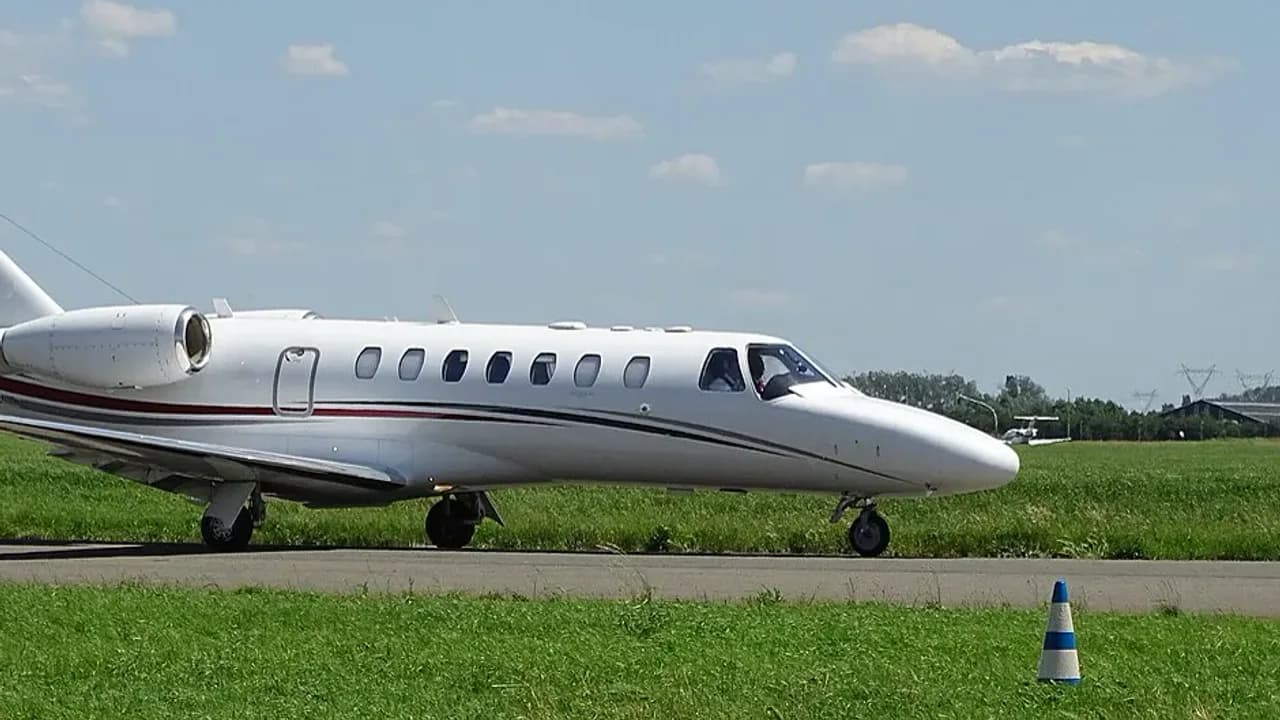
The main private jet airports near San Francisco are SFO and Oakland (OAK), each about 11 to 12 miles from the Financial District, and San Jose (SJC) for Silicon Valley. All three have long runways, private terminals and customs. Hayward (HWD) and Concord (CCR) serve the East Bay on smaller jets, and Napa (APC) and Santa Rosa (STS) serve wine country.
Key takeaways
- SFO and Oakland are equally close to downtown San Francisco in a straight line; Oakland is often quicker on the ground for private flights.
- San Jose is the airport for Silicon Valley, with two 11,000-foot runways and a nighttime curfew.
- Customs for international private flights is at SFO, Oakland and San Jose, which the FAA lists as customs landing rights airports.
- Palo Alto and San Carlos have runways too short for business jets; use San Jose, SFO or Hayward instead.
- Napa and Santa Rosa put you within minutes of wine country.
Which airports serve the Bay Area by private jet?
Eight airports handle most private flights around San Francisco Bay. Runway, FBO and customs details are from the FAA airport data on AirNav, such as Oakland's listing. None of the Bay Area airports appear on CBP's list of user-fee airports, so customs is limited to the three main airports.
| Airport | Longest runway | Customs | Best for |
|---|---|---|---|
| San Francisco Intl (SFO) | 11,870 ft | Customs landing rights | San Francisco, the Peninsula, long-range trips |
| Oakland (OAK) | 10,520 ft | Customs landing rights | San Francisco, Oakland, the East Bay |
| San Jose (SJC) | 11,000 ft | Customs landing rights | Silicon Valley, San Jose |
| Hayward (HWD) | 5,694 ft | None listed | East Bay, the Peninsula via the San Mateo Bridge |
| Concord, Buchanan Field (CCR) | 5,001 ft | None listed | Walnut Creek, Lafayette, Contra Costa |
| Livermore (LVK) | 5,253 ft | None listed | Pleasanton, the Tri-Valley |
| Napa County (APC) | 5,930 ft | None listed | Napa Valley |
| Sonoma County, Santa Rosa (STS) | 6,000 ft | None listed | Healdsburg, Sonoma County |
To compare what each aircraft class costs from the Bay Area, use our private jet cost calculator, and for airports in other cities see the top private jet airports in the US.
Should you fly private into SFO or Oakland?
Both are about 12 miles from the Financial District in a straight line, so the choice usually comes down to traffic, the bridge and the airport.
San Francisco International (SFO) has very long runways, about 11,870 feet, and a Signature Aviation FBO. It suits large jets on long international flights and passengers heading to the city, the Peninsula or Marin. SFO is one of the busiest airline airports in the country, so expect longer taxi times and airspace delays, especially when low clouds slow arrivals. The FAA notes it is a noise-sensitive airport with its own noise office.
Oakland (OAK) has a 10,520-foot main runway on the south field and FBOs run by Signature Aviation and KaiserAir. It is about 6 miles from downtown Oakland and 11 from the Financial District, across the Bay Bridge. Oakland's noise abatement procedures apply around the clock to jets, which normally use the long runway 12/30. For many charter passengers, Oakland means a shorter taxi and a quicker departure than SFO, at the cost of a bridge crossing into the city.
When is San Jose the better choice?
San Jose is the main private jet airport for Silicon Valley, about 3 miles from downtown San Jose and 13 miles from Palo Alto in a straight line. It has two runways of 11,000 feet, FBOs run by Signature Aviation and Atlantic Aviation, and customs landing rights for international arrivals.
Two things to know:
- Curfew. The FAA lists curfew hours at San Jose of 11 p.m. to 7 a.m. for older Stage 2 aircraft and 11:30 p.m. to 6:30 a.m. for Stage 3 aircraft on the airport's authorized schedule. Late-night arrivals need planning, and the operator will check the rules for your aircraft.
- Noise procedures. Jets are asked to use preferred runways for arrivals and departures.
For Palo Alto, Menlo Park and Atherton, San Jose and SFO are about equally close, and the better choice depends on traffic on Highway 101 at your arrival time.
Hayward, Concord and Livermore: the smaller East Bay airports
These airports avoid the airline traffic but have shorter runways, so they suit light and midsize jets on shorter trips.
- Hayward (HWD) has a 5,694-foot runway and a Meridian FBO. It is about 13 miles from downtown Oakland and 14 to 15 miles from Atherton and Palo Alto, across the San Mateo Bridge.
- Concord's Buchanan Field (CCR) has a 5,001-foot main runway, FBOs run by Concord Jet Center and Pacific States Aviation, and noise abatement procedures. It is about 6 miles from Walnut Creek.
- Livermore (LVK) has a 5,253-foot runway and a Five Rivers Aviation FBO, about 4 miles from Pleasanton.
Runways of about 5,000 to 5,700 feet work well for light jets and midsize jets, and for many super midsize jets on shorter trips. For a heavy jet with full fuel, the operator will normally choose Oakland, SFO or San Jose. Avoid assuming that every airport on the map takes jets: Palo Alto's runway is about 2,440 feet and San Carlos's about 2,620 feet, both too short for business jets, and Half Moon Bay's 5,000-foot runway has no FBO listed.
Flying private to Napa and Sonoma
Wine country has two good airports, both much closer to the vineyards than any Bay Area airport.
- Napa County (APC) has a 5,930-foot runway and the Skyservice Napa FBO, about 6 miles from Napa.
- Charles M. Schulz Sonoma County (STS) in Santa Rosa has a 6,000-foot runway and two FBOs, KaiserAir's Santa Rosa Jet Center and Sonoma Jet Center. It is about 8 miles from Healdsburg.
Both suit light, midsize and many super midsize jets. Harvest season and summer weekends are busy, so book early and ask about empty legs that match your dates. Neither airport lists customs, so international arrivals clear at SFO, Oakland or San Jose first.
Which Bay Area airport is closest to where you are going?
Straight-line distances, in statute miles:
| Destination | SFO | OAK | SJC | HWD | CCR | APC | STS |
|---|---|---|---|---|---|---|---|
| Financial District | 12 | 11 | 39 | 18 | 23 | 30 | 54 |
| Pacific Heights | 12 | 13 | 41 | 20 | 25 | 30 | 54 |
| Palo Alto | 18 | 20 | 13 | 15 | 38 | 54 | 82 |
| Atherton | 15 | 18 | 16 | 14 | 37 | 52 | 80 |
| Downtown San Jose | 33 | 32 | 3 | 26 | 46 | 64 | 96 |
| Downtown Oakland | 14 | 6 | 36 | 13 | 17 | 28 | 57 |
| Walnut Creek | 26 | 16 | 39 | 18 | 6 | 24 | 58 |
| Napa | 47 | 40 | 67 | 45 | 25 | 6 | 32 |
| Healdsburg | 74 | 71 | 100 | 77 | 61 | 42 | 8 |
Bridges and freeway traffic can make a short distance slow, especially at rush hour. Arrange a car to meet you at the FBO; our guide to what an FBO is explains what to expect on arrival.
Fog and weather in the Bay Area
Low clouds and fog are the Bay Area's main weather issue, and they behave differently around the bay. The marine layer often covers the coast and the bay on summer mornings, then burns off later in the day.
- SFO arrivals can slow down when clouds are low, which can mean airborne delays or a later arrival slot.
- Inland airports are often clearer. Concord, Livermore and Napa may be in sunshine when the coast is foggy, though they can see their own morning fog in winter.
- Half Moon Bay sits on the coast and is often fogged in.
If timing matters, ask the operator which airport is likely to work best for your arrival time, and leave slack before important meetings. Winter storms bring rain and wind rather than snow at Bay Area airports.
Popular private jet routes from the Bay Area
Most West Coast and Mountain trips are within light jet range, and Hawaii needs a larger aircraft. Straight-line distances from SFO, with estimated still-air flight times at typical class speeds:
| Destination | Distance | Usual class | Est. time |
|---|---|---|---|
| Los Angeles (Van Nuys) | 280 nm | Light jet | 58 min |
| Las Vegas | 360 nm | Light jet | 1 h 10 min |
| Sun Valley | 510 nm | Light jet | 1 h 31 min |
| Scottsdale | 565 nm | Light jet | 1 h 39 min |
| Seattle (Boeing Field) | 595 nm | Light jet | 1 h 43 min |
| Aspen | 735 nm | Light or midsize jet | 2 h 03 min |
| Cabo San Lucas | 1,085 nm | Midsize jet | 2 h 52 min |
| Maui | 2,030 nm | Super midsize jet or larger | 4 h 54 min |
| New York (Teterboro) | 2,225 nm | Super midsize jet | 5 h 20 min |
| Tokyo (Narita) | 4,440 nm | Long-range heavy or ultra long range jet | 9 h 51 min |
Eastbound flights are often quicker than these still-air times and westbound flights slower, which matters most on the long overwater flight to Hawaii. For Southern California, see our guides to Los Angeles private jet airports and private jet charter in Los Angeles; for the mountains, see private jets to Aspen. Our range guide explains which jets can fly the longer trips nonstop.
Typical US charter rates run about $4,000 to $5,900 per flight hour for a light jet, $5,000 to $7,200 for a midsize jet and $6,500 to $9,800 for a super midsize jet, before taxes and fees; quotes vary with season, availability and positioning.
Customs when flying into the Bay Area from abroad
International arrivals clear customs at SFO, Oakland or San Jose. All three are customs landing rights airports, which means the operator must request permission to land and arrange customs in advance. The smaller airports do not list customs, so a flight from Mexico or Canada to Napa normally stops at one of the three main airports first.
Bring a valid passport for every passenger; see what ID you need to fly private. Our guide to flying a private jet internationally covers customs and paperwork in full, and for airports in other large metros, see private jet airports near Chicago and near Dallas.
Plan your Bay Area charter
Pick the airport by where you are going, the size of the aircraft and the time of day, then check customs and curfew rules if they apply. Estimate your trip with the charter flight cost calculator, and request a quote with your dates, group size and destination.