

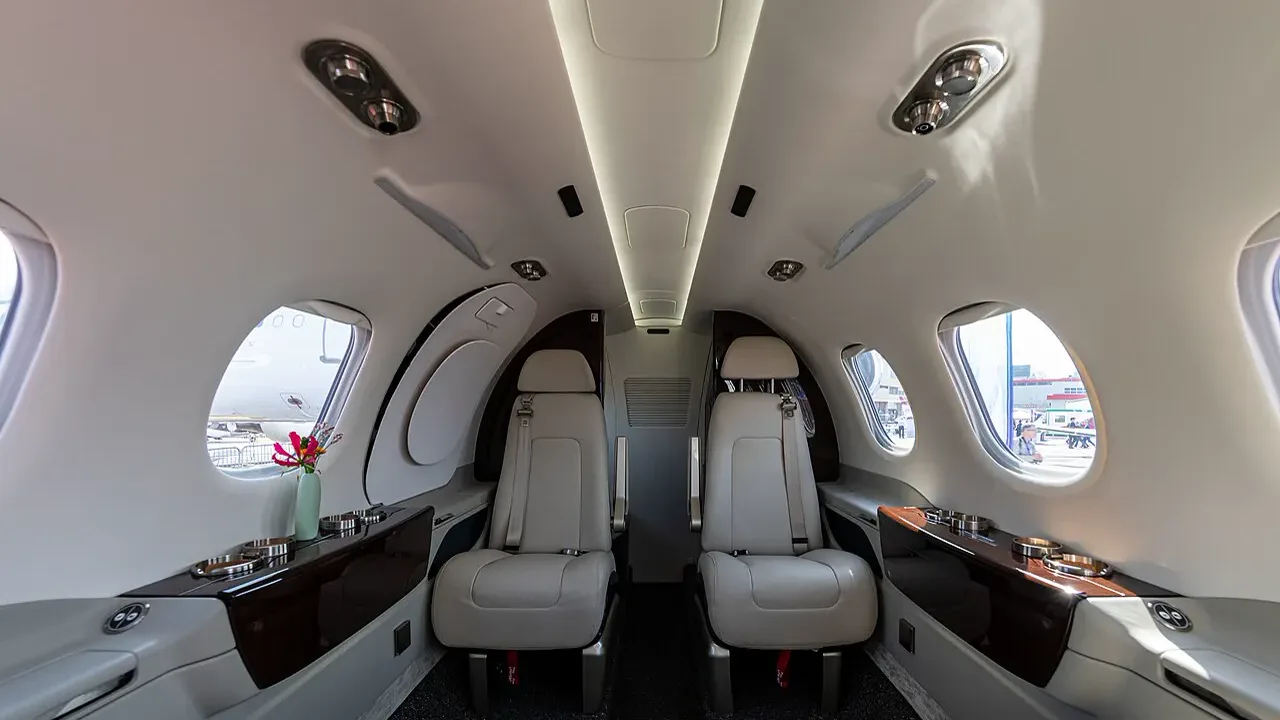
Private jet catering is usually arranged by the operator or broker through an outside caterer, ordered at least a day ahead and billed at cost on top of the charter price. What is practical depends on the aircraft: light jets carry cold dishes and snacks, while larger jets with full galleys can serve hot meals. On charter flights, only the operator may serve alcohol.
Key takeaways
- Basic snacks and soft drinks are often included; meals usually are not. Catering is typically billed at cost, often with a handling fee.
- Order early, ideally at least a day ahead, and give the caterer your passenger count, timing and any allergies.
- Match the menu to the galley. Small jets suit cold platters; large jets can heat and plate full meals.
- Alcohol must be served by the operator under FAA charter rules; you cannot drink your own.
- International trips add rules on bringing food into the US.
How does private jet catering work?
Most charter operators order catering from specialist aviation caterers or local restaurants near the departure airport, then load it before you board. The process usually runs like this:
- You share your preferences with the broker or operator: number of passengers, meal times, dietary needs and any special requests.
- The operator places the order with a caterer that delivers to the FBO, the private terminal where your flight departs.
- The caterer delivers before departure, packed for travel. The crew stores it and loads it aboard.
- The crew or a cabin attendant serves it during the flight, within the limits of the aircraft's galley.
Aviation caterers know what travels well, how to pack for small galleys and how to label items for allergies. Restaurant food is possible too, but it may not be designed to be held and served hours later. For how FBOs fit into the trip, see what is an FBO?.
How much does private jet catering cost?
Catering is usually billed at cost on top of the charter price, often with a handling or coordination fee. There is no standard price: it depends on the caterer, the airport, the menu and the number of passengers. Premium items such as specific wines, sushi or dishes from a particular restaurant cost more and may need more notice.
To keep the bill predictable:
- Ask what is already included. Many operators stock water, soft drinks, coffee and basic snacks.
- Request an estimate before confirming a large order.
- Order for the flight length. A one-hour hop rarely needs a full meal.
Catering is one of the extras that appear as separate lines on a quote; our guide to repositioning, overnight and other charter fees explains how they are billed. For the core flight cost, use our private jet cost calculator.
What can you order on each jet size?
The galley sets the limits. Smaller jets have limited space to store and heat food, so cold dishes travel best; larger jets can serve full hot meals.
| Class | Typical galley | What works well |
|---|---|---|
| Turboprops and very light jets | Small refreshment area, little or no heating | Snacks, sandwiches, fruit, cold drinks |
| Light jets | Refreshment center, limited storage | Cold platters, salads, sandwiches, desserts |
| Midsize jets | Larger refreshment area, some can warm food | Cold meals, simple warm dishes on some aircraft |
| Super midsize jets | Many have a full galley | Hot meals, coffee service, plated courses |
| Heavy and ultra long range jets | Full galley | Multi-course meals, breakfast and dinner on long flights |
Galley equipment varies by aircraft, so confirm with the operator what your specific jet can heat, chill and store. If hot food matters, say so when you request quotes.
What should you order for a private jet flight?
Order food that holds well, is easy to eat in a seat and suits the length of the flight.
- Under two hours: snacks, fruit, cheese, sandwiches, pastries or a light breakfast.
- Two to five hours: a cold or warm meal, such as salads, grain bowls, cold proteins or, on larger jets, a hot main course.
- Long-haul: a full menu, with a meal after takeoff, snacks during the flight and breakfast before landing.
A few practical tips:
- Avoid strong smells in a small cabin, such as heavily spiced dishes or certain seafood.
- Choose foods that travel well. Crisp items go soft, and delicate dishes can suffer from being held.
- Think about children. Simple, familiar food reduces mess and stress.
- Ask for labels on dishes, especially when the group has allergies.
How do you handle allergies and dietary needs?
Share allergies and dietary requirements in writing when you book, and ask the operator to confirm them with the caterer. Caterers can usually prepare vegetarian, vegan, gluten-free, kosher, halal and other requirements with notice.
For serious allergies:
- Name the allergy clearly and the level of risk, for example a severe nut allergy.
- Ask for labeled, separately packed items for the person affected.
- Bring any medication the person needs, such as an epinephrine auto-injector, in the cabin.
- Tell the crew at boarding, so they know which items are which.
No caterer can promise a completely allergen-free environment on an aircraft, so if the risk is high, consider bringing safe food for that passenger as well.
Can you drink alcohol on a private jet?
Yes, but on a charter flight only the operator may serve it. Under 14 CFR 135.121, passengers may drink alcohol aboard only if the certificate holder operating the aircraft serves it, and the operator may not serve anyone who appears to be intoxicated.
In practice:
- Order drinks with the catering. The operator buys and stocks them and serves them during the flight.
- You cannot drink alcohol you bring aboard yourself. If you have a special bottle, ask the operator whether it can be served under its procedures.
- Crew discretion applies. The operator decides what is safe to serve.
Who serves the food?
On most private jets, there is no flight attendant unless you request one. Under 14 CFR 135.107, a charter aircraft needs a flight attendant only if it has more than 19 passenger seats, which most business jets do not. On smaller jets, food is usually set out in the cabin for passengers to help themselves, or the crew helps before takeoff.
On larger jets, many operators can provide a cabin attendant on request, usually at extra cost. On long flights with hot meals, an attendant makes a real difference.
Catering for groups and special occasions
Groups and celebrations need a little more planning, because space and serving help are limited.
- Groups: for six or more passengers on a light or midsize jet, shared platters and individually boxed meals usually work better than plated courses. Ask the caterer to pack each passenger's meal separately.
- Birthdays and celebrations: a cake, flowers or a bottle of champagne can usually be arranged with notice. Choose a cake that travels well and can be cut in a small space, and remember that the operator must serve any alcohol.
- Early departures: a light breakfast with coffee is often the most appreciated order on morning flights, especially when passengers skip breakfast to make the departure time.
- Business trips: keep it simple and tidy, with food that can be eaten while working, and ask for coffee and water to be ready at boarding.
Common catering mistakes to avoid
- Ordering too late. Same-day requests limit the choice, especially at small airports or early in the morning.
- Ordering too much. Leftovers cannot always be taken off the aircraft at the destination, particularly on international trips.
- Forgetting the galley. Ordering hot dishes for an aircraft that cannot heat them leads to cold meals.
- Not sharing allergies in writing. Verbal requests passed between several people are easy to lose.
- Assuming it is included. Check the quote so the catering bill is not a surprise.
Catering on international trips
Food rules apply when you fly into the US. US Customs and Border Protection requires travelers to declare meats, fruits, vegetables, plants and plant and animal products on arrival, and many are prohibited. See CBP's guidance on bringing food into the US.
For private flights, that means:
- Order catering for the return leg locally, and plan to finish it before landing in the US.
- Do not bring local produce or meat products home unless you know they are allowed.
- Declare anything you are unsure about. The operator and crew can advise.
Our guide to flying a private jet internationally covers customs and paperwork in full.
Planning catering for your charter
Tell us the number of passengers, meal times and any dietary needs when you request a quote, and ask for catering to be priced separately so you can see the cost. If hot meals matter, ask about galley capability before choosing the aircraft.