

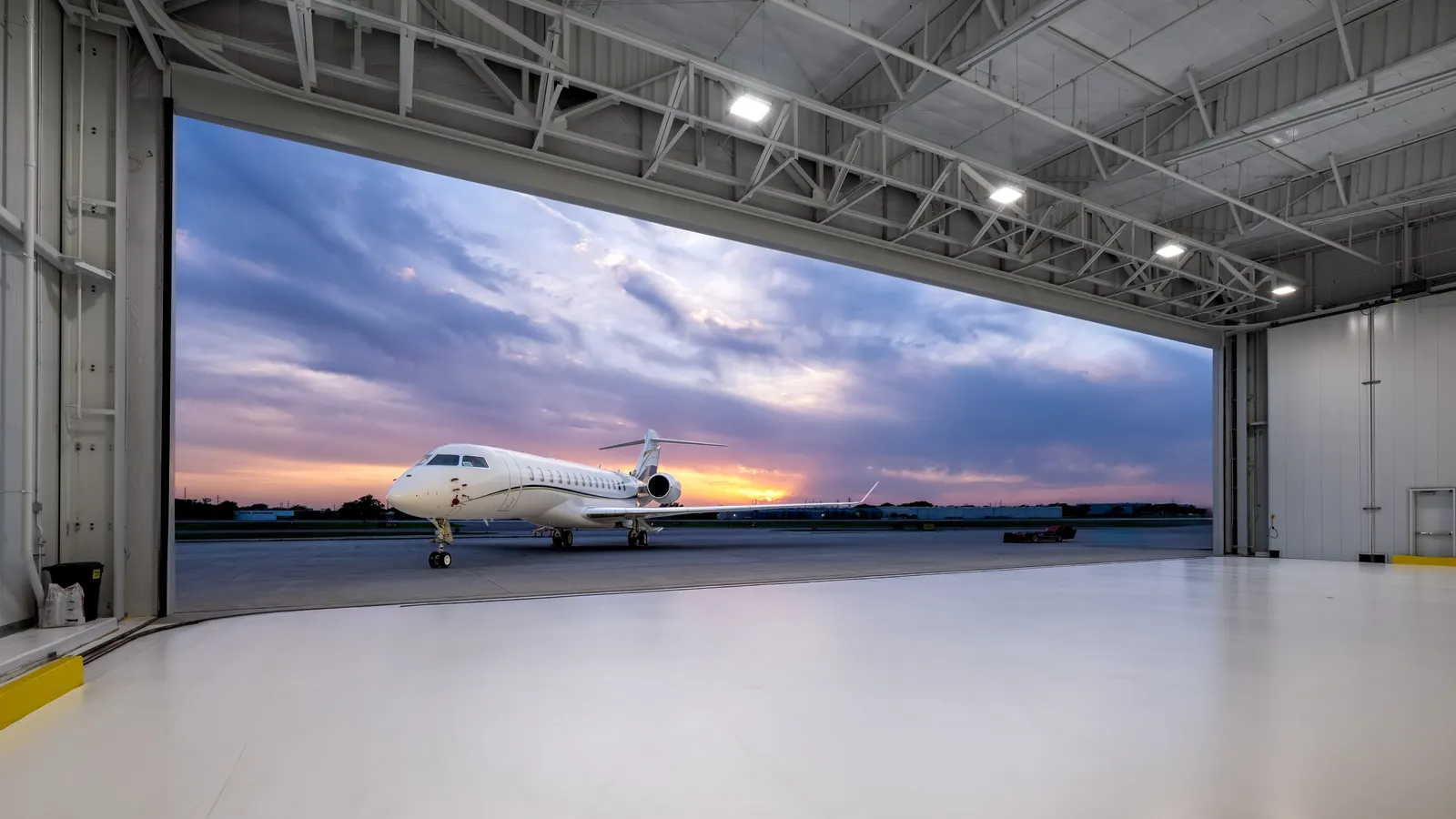
On top of the hourly rate, a private jet charter quote usually adds repositioning (flying the aircraft empty to or from your trip), daily minimums on multi-day trips, crew overnight costs, landing and handling fees, extras such as catering and de-icing, and taxes. Repositioning is usually the biggest extra on a one-way trip; daily minimums and overnights dominate on long stays.
Key takeaways
- The hourly rate covers flight time only. Everything else on a quote is a separate line.
- Repositioning is the empty flight to or from your trip, billed at or near the hourly rate.
- Daily minimums of about two flight hours per day make long stays expensive if the aircraft waits.
- Crew overnights, landing fees and handling add hundreds to a few thousand dollars per night or leg.
- Domestic taxes apply to almost everything, including empty legs and waiting time.
What fees are on a private jet charter quote?
A typical quote has five to eight lines. The table shows the common ones, what drives each and how large they tend to be.
| Line | What it covers | Typical size |
|---|---|---|
| Flight time | Hours with you aboard × hourly rate | The core cost |
| Repositioning | Empty flight to collect you or return to base | Up to the full flight time again on a one-way |
| Daily minimum | Billed hours per day when you fly less | About 2 hours per day at many operators |
| Crew overnights | Hotel, meals and transport per night away | About $900–1,600 per night in our calculator |
| Landing, handling, FBO | Airport and ground-handling charges per leg | About $400–3,500 per leg for jets, by aircraft size |
| Extras | Catering, de-icing, hangar, Wi-Fi, permits | Billed at cost, varies widely |
| Taxes | US excise tax and segment fees, or international fees | 7.5% plus per-passenger fees on domestic trips |
Hourly rates themselves vary by class, from about $4,000 to $5,900 for a light jet to $11,000 to $17,500 for an ultra long range jet, before these extras. To see every line for your route, run it through our charter flight cost calculator, which itemizes repositioning, minimums, fees and taxes. Our guide to private jet charter costs explains the hourly rates by class.
What is a repositioning fee?
Repositioning is flying the aircraft without passengers, either to where your trip starts or back to its base after your trip ends. Most charter aircraft have a home base where the crew lives and the maintenance happens, so an aircraft that drops you off far from home has to come back, and that flight usually appears on your quote.
How it shows up:
- Outbound positioning: if the best-suited aircraft is based in another city, you may pay for it to fly to you first.
- Return positioning: on a one-way trip, the empty flight home is usually billed, which is why a one-way can cost close to a round trip.
- Discounts: if the aircraft has another booking from your destination, or the operator sells the return as an empty leg, the repositioning charge can shrink or disappear. Our empty leg flights guide explains how that pricing works.
Repositioning is not a junk fee: the empty flight burns the same fuel and crew time. But it is the line most worth negotiating. Asking for an aircraft based near your departure or destination, or flexible timing, can cut it sharply. Our guide to one-way private jet charter covers the tactics.
What are daily minimums and overnight fees?
Daily minimums and crew overnights are what you pay to keep an aircraft and its crew with you.
- Daily minimum: many operators bill at least about two flight hours for each day of a trip. If you fly 47 minutes to Las Vegas and back the same day, you pay for two hours; if the aircraft waits three days in Aspen, you pay for at least two hours each day.
- Crew overnights: the crew's hotel, meals and transport for each night away from base. Operators bill actual costs or a set nightly rate.
- Crew duty limits: under 14 CFR 135.267, a two-pilot charter crew may fly no more than 10 hours in 24 consecutive hours and needs at least 10 consecutive hours of rest. A very long day can force an overnight, or a second crew, that you pay for.
Overnights can also bring parking or hangar fees at the destination airport, especially in winter, when a heated hangar avoids de-icing the next morning.
Why a round trip can cost more than two one-ways
On a short stay, a round trip is usually cheaper; on a long stay, two one-ways often win. Here is the same route estimated three ways with our calculator: Dallas Love Field to Aspen, about 620 nm, in a midsize jet with four passengers.
| Line | One way | Round trip, 2 nights | Round trip, 5 nights |
|---|---|---|---|
| Flight time (occupied) | $8,800–12,700 | $17,600–25,400 | $17,600–25,400 |
| Repositioning (empty return) | $5,300–12,700 | – | – |
| Daily minimum top-up | – | $12,400–17,800 | $42,400–61,000 |
| Landing, handling, FBO | $500–1,200 | $1,000–2,400 | $1,000–2,400 |
| Crew overnights | – | $1,800–3,200 | $4,500–8,000 |
| US excise tax and segment fees | $1,100–2,000 | $2,500–3,700 | $5,000–7,300 |
| Estimated total | $15,700–28,600 | $35,300–52,500 | $70,500–104,100 |
The pattern: with a five-night stay, the daily minimum alone exceeds the cost of flying the trip, so two separate one-way trips (about $31,000 to $57,000 combined) cost far less than keeping the aircraft waiting. With two nights, the round trip and two one-ways are close, and the round trip saves you the risk of finding no return aircraft. Always ask for both versions.
These are estimates using typical rates; they exclude catering, de-icing and Aspen's own landing fee, and real quotes vary with the aircraft, season and positioning.
What other fees can appear on a charter quote?
Airport, handling and service fees vary by airport, aircraft size and season.
- Landing fees: set by the airport, often by aircraft weight. Van Nuys charges $6.44 per 1,000 lb of maximum landing weight, according to its landing fee page, and Aspen charges general aviation aircraft $13.76 per 1,000 lb of maximum takeoff weight, according to its pilot information page.
- FBO handling and ramp fees: charged by the private terminal for parking, ground handling and services. They are sometimes reduced or waived when the aircraft buys fuel there.
- De-icing: billed at cost on cold days, and can be substantial for a large aircraft.
- Catering: ordered from outside caterers and billed at cost, usually with a handling charge.
- Wi-Fi: some operators charge for connectivity by the hour or by data used.
- International charges: overseas handling, navigation charges, landing permits and customs fees on international trips. US customs at user-fee airports adds its own charge.
- Peak-day surcharges: some operators add a premium on the busiest holiday dates.
Ask which of these are included in the quoted price and which will be billed afterward at cost. Fees billed later should be listed in the contract; our charter contract red flags guide covers what to check.
How much tax is added to a private jet charter?
Domestic US charter carries a 7.5% federal excise tax on the amount paid, plus a per-passenger segment fee. IRS Publication 510 lists "layover or waiting time, and movement of aircraft in deadhead service" among the amounts paid for air transportation that the 7.5% tax applies to. In practice, that means repositioning and daily minimums billed to you are taxed too. For 2026, the IRS sets the domestic segment fee at $5.30 per passenger per segment and the international arrival and departure fee at $23.40 per passenger.
International trips that leave the US zone pay the per-passenger international fee instead of the 7.5% tax. Foreign countries add their own charges, such as UK Air Passenger Duty on departures from the UK. The charter tax calculator estimates the US side, and our guide to federal excise tax on private jet charter explains the rules.
How to read a charter quote line by line
Read a quote from the top down, checking that each line is specific and that nothing is left open-ended.
- Operator and aircraft: the quote should name the Part 135 operator and the aircraft type, ideally the registration. See how to verify a Part 135 charter operator.
- Itinerary and flight times: each leg with estimated block time, including any positioning legs, marked as such.
- Hourly rate and billed hours: confirm whether billed hours include repositioning and daily minimums, and whether time is billed from engine start or wheels-up.
- Repositioning: listed separately, with hours. Ask whether it can be reduced if the aircraft finds another booking.
- Fees: landing, handling, crew overnights, hangar and any surcharges, each as its own line or clearly "included".
- At-cost items: catering, de-icing, Wi-Fi and permits listed as "billed at cost", with how you will see the receipts.
- Taxes: US excise tax and segment fees on domestic trips, international fees on overseas trips.
- Terms: deposit, payment deadline, cancellation schedule and what happens if the aircraft is unavailable.
Two quotes are only comparable when they price the same aircraft class on the same basis. A quote that looks cheaper may simply leave out repositioning or fees that another includes.
Get a clear, itemized quote
Start with an estimate from the charter cost calculator, then request a quote. Ask for an itemized quote that shows repositioning, minimums, fees and taxes on separate lines, and for a round trip and two one-ways priced side by side when the length of your stay makes the difference worth checking.