

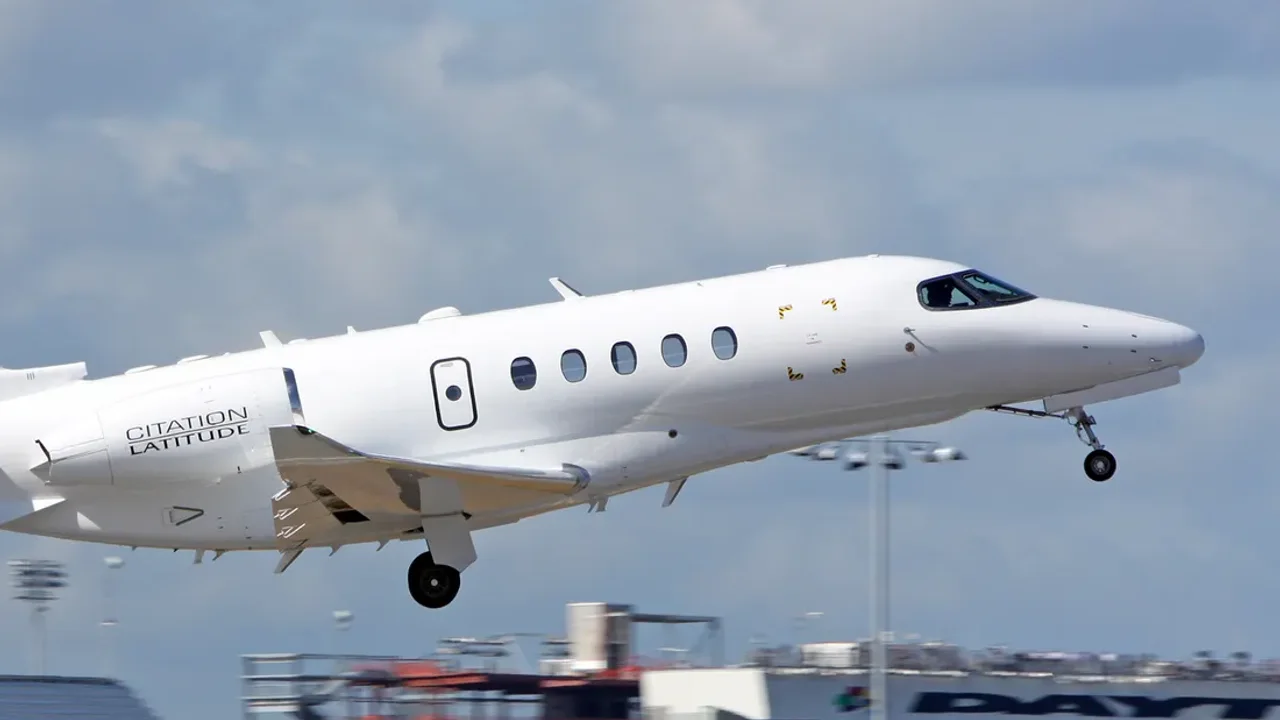
A roadshow charter keeps one private jet and crew with an executive team as it visits several cities, often three or four a day. The team leaves each city when the meeting ends, works on board between stops and finishes the day where the next meetings start. Plan around ground transport, crew rest rules and the aircraft's return at the end.
Key takeaways
- One aircraft, many cities: the jet waits at each stop and leaves when you are ready.
- Three or four cities a day is realistic when legs are one to two hours.
- Crew rules shape long days. A two-pilot crew may fly no more than 10 hours in 24 under FAA charter rules.
- The end of the trip matters. If the roadshow finishes far from the aircraft's base, the empty return is part of the price.
- Pick airports for meetings, not just runways: a close FBO can save more time than a faster jet.
Why charter for a roadshow?
Because the schedule belongs to the meetings, not the airlines. A roadshow packs meetings into a few days across several cities. With airline flights, every leg depends on a timetable, security lines and connections, and one overrun meeting can break the plan. With a charter:
- The aircraft waits for you, so a meeting that runs long does not cost the next city.
- You use business aviation airports close to downtown and suburban office parks.
- The cabin becomes a meeting room for briefings and calls between stops.
- Confidential conversations stay private, with no strangers in the next seat.
For how companies book and vet charter more generally, see our guide to executive jet charter, which includes a worked example of a same-day three-city trip.
Sample itinerary: a two-day, six-city roadshow
Here is a hypothetical roadshow for five people, with estimated still-air flight times for a midsize jet at typical class speed:
| Day | Leg | Airports | Distance | Est. time |
|---|---|---|---|---|
| 1 | New York to Boston | Teterboro to Bedford | 158 nm | 40 min |
| 1 | Boston to Chicago | Bedford to Chicago Executive | 737 nm | 2 h 03 min |
| 2 | Chicago to Denver | Chicago Executive to Centennial | 783 nm | 2 h 09 min |
| 2 | Denver to San Francisco | Centennial to SFO | 829 nm | 2 h 16 min |
| 2 | San Francisco to Los Angeles | SFO to Van Nuys | 278 nm | 58 min |
Day 1 has under three hours of flying, with meetings in New York before departure, in Boston and that evening in Chicago. Day 2 has about five and a half hours of flying across three legs. The team overnights in Chicago, and so does the crew.
For airport choices in these cities, see our guides to New York private jet airports, private jet airports near Chicago, near San Francisco and Los Angeles private jet airports.
How much does a roadshow charter cost?
Estimates for the sample itinerary, using the same method as our private jet cost calculator: flight time at typical class rates, the two-hour daily minimum many operators apply, landing and handling fees for each leg, one crew overnight, and US excise tax and segment fees:
| Aircraft | Roadshow legs only | Including empty return to New York |
|---|---|---|
| Midsize jet | $47,300–$70,900 | $64,500–$112,200 |
| Super midsize jet | $59,400–$92,700 | $80,900–$146,600 |
The return makes a big difference. Ending a roadshow on the opposite coast from the aircraft's base can add a five-hour empty flight. Ways to reduce it:
- Choose an aircraft based near the end of the trip, or one that has another booking from there.
- Fly the team home on the same aircraft if that fits the schedule.
- Ask about one-way pricing and empty legs; see one-way private jet charter.
These are planning estimates. Real quotes depend on the aircraft's base, availability, catering, de-icing and how long the aircraft waits at each stop.
Shuttle flights: the same route again and again
Some companies need the opposite of a roadshow: the same short route, flown repeatedly, such as executives commuting between a headquarters and a plant, or a team moving between two offices each week. Charter can work as a shuttle, with the same aircraft class booked on a regular schedule.
As an example, a same-day round trip between Teterboro and Bedford, near Boston, is about 158 nm each way, roughly 41 minutes per leg in a light jet. For four people, our estimator puts it at about $9,500 to $14,700, including fees and taxes. Because the flying time is less than the two-hour daily minimum many operators bill, the price barely changes if the day includes a third short leg.
Ways to make a shuttle more efficient:
- Use the daily minimum. If you are paying for two hours anyway, add a stop that would otherwise need a separate trip.
- Book a regular schedule. Operators can plan crews and aircraft more efficiently for recurring trips, which can help with availability and pricing.
- Consider a turboprop for very short routes; see turboprop vs light jet.
- Compare with a jet card if you fly the route often; see jet card vs charter vs fractional ownership.
Crew rules: how long can a roadshow day be?
The crew's limits often set the shape of the day. Under 14 CFR 135.267, a two-pilot crew on an unscheduled charter may not fly more than 10 hours of flight time in 24 hours, and the assignment must include at least 10 consecutive hours of rest in the 24 hours before it ends. Duty periods and rest rules also limit how long a working day can run.
In practice:
- Long days need early planning. A day with early departures, several waits and a late final leg can reach the crew's limits even if the flying is short.
- Overnights reset the clock. Ending each day where the team sleeps gives the crew legal rest.
- A fresh crew may be needed for very long days, which adds cost and positioning.
Share the full itinerary, including meeting times, before you book, so the operator can confirm the crew plan.
Choosing the right aircraft
For most roadshows, a light or midsize jet does the job. Legs between major cities are usually one to two hours, well within their range. Cessna lists the Citation Latitude, a popular midsize choice, at a maximum range of 2,700 nm, a maximum cruise speed of 446 knots and up to 9 occupants.
| Team size | Typical legs | Usual choice |
|---|---|---|
| 2–5 people | Up to about 2 hours | Light jet |
| 4–8 people | Up to about 3 hours | Midsize jet |
| 6–10 people, or a coast-to-coast leg | Longer legs | Super midsize jet |
What matters more than speed:
- Wi-Fi that works across the route, for calls between meetings; see private jet Wi-Fi.
- A table and quiet cabin for preparing the next meeting.
- Catering timed for long days; see private jet catering.
- Baggage space for presentation materials and overnight bags.
Tips for keeping a roadshow on time
- Book ground transport for every stop, with drivers waiting at the FBO.
- Choose airports by meeting location. A smaller airport 15 minutes from the office often beats a major airport 45 minutes away.
- Leave buffers. Allow for meetings running long and for traffic between the FBO and the office.
- Confirm FBO hours for early and late legs.
- Plan for weather, especially winter de-icing in the Northeast and Midwest.
- Keep one point of contact with the broker or operator throughout the trip, so changes are made quickly.
International roadshows
Crossing borders adds time at each arrival. A roadshow that includes Toronto, Mexico City or London needs passports for everyone, advance passenger information for customs and arrival at an airport with customs available at your landing time. Allow extra time for the first stop in each country, and check whether the next leg can depart directly or needs to clear customs again. Our guide to international private jet travel covers the paperwork, and what ID you need to fly private lists the documents.
Confidentiality on board
Business jets offer privacy, but take normal care. Crew and FBO staff will see who is traveling, and passenger names are shared with the operator for the manifest. For sensitive projects:
- Use a company VPN on the aircraft's Wi-Fi.
- Ask about the operator's confidentiality practices and whether a non-disclosure agreement is available.
- Keep sensitive documents with you, not in the baggage hold.
Plan your roadshow
Request a quote with the cities, dates, meeting times and team size. We will compare aircraft from certificated operators, name the aircraft and operator on each quote and confirm the crew plan for your schedule.