

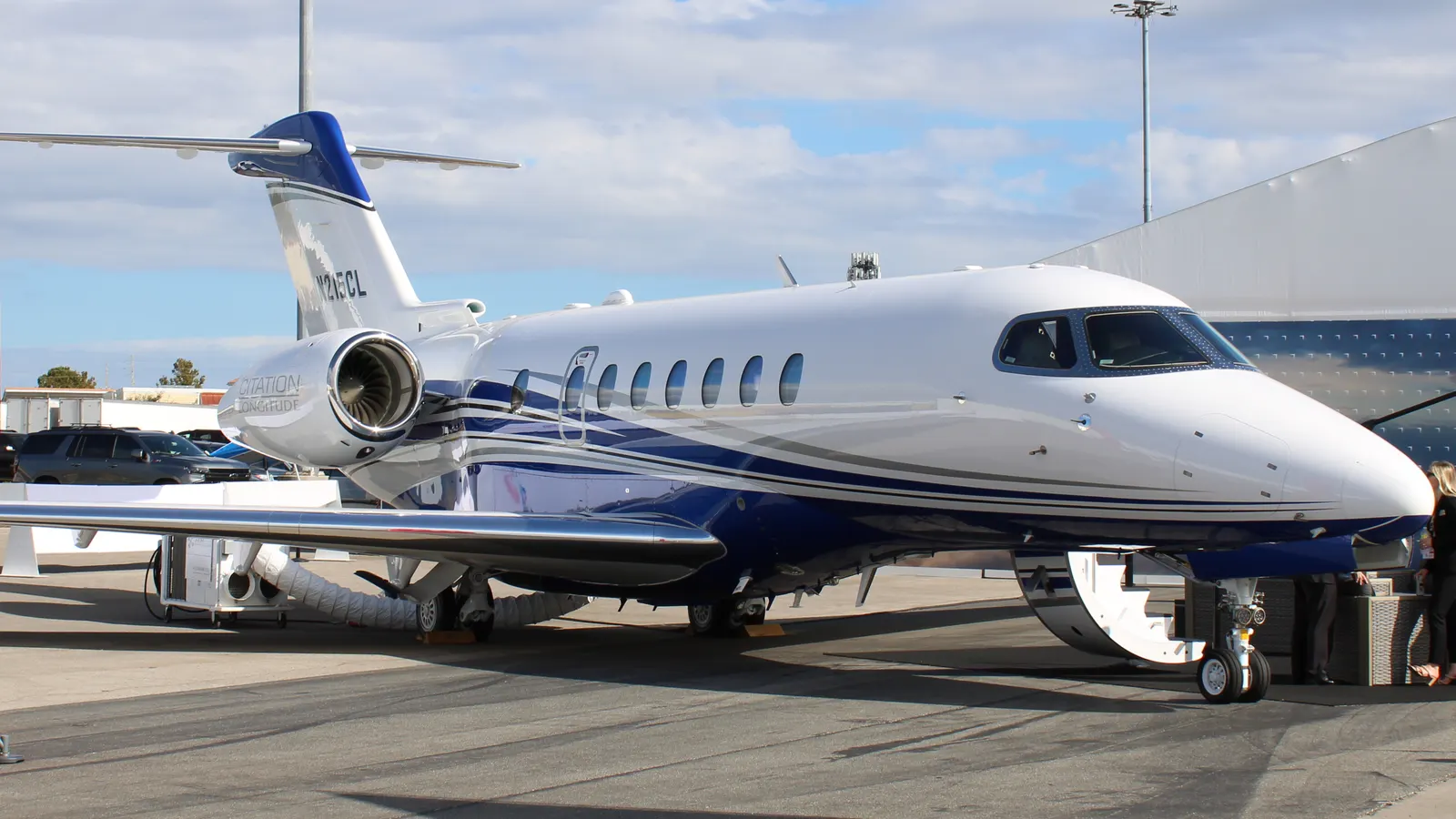
Executive jet charter means a company hires a whole private jet, with crew, from a certificated FAA Part 135 operator for a business trip. Most trips use light, midsize or super midsize jets. Typical US rates are about $4,000 to $9,800 per flight hour, plus a 7.5% federal excise tax and per-passenger segment fees. Charter pays off when it saves hours, makes multi-city days possible or keeps meetings private.
Key takeaways
- You buy the trip, not the aircraft. The operator flies and maintains the jet. The company pays per trip and has no ownership costs.
- Most business trips fit three classes. Light jets cover short regional legs. Midsize jets suit longer domestic days. Super midsize jets cross the US nonstop.
- Price is mostly flight hours. Add repositioning, airport fees, crew costs, taxes and, as of 2026, a $5.30 per-passenger segment fee.
- Vetting belongs in the travel policy. Require a Part 135 operator and, if the company wants it, an ARGUS, Wyvern or IS-BAO audit standard.
- A good brief gets a clean quote. Send firm times, names, bags and policy requirements up front.
Why do companies charter executive jets?
Companies charter jets for business when the time saved, the schedule control or the privacy is worth more than the price gap with airline tickets. Executives with a busy day, small teams covering several cities and confidential deals usually justify the cost. A single traveller on an easy nonstop airline route usually does not.
The National Business Aviation Association puts the time case plainly. It says business aircraft let users "accomplish more in one day than others can in several days". They also reach places airlines don't serve and are "not limited by the constraints of an airline's schedule." In practice, the reasons look like this:
- Time. Passengers arrive at a private terminal, called an FBO, shortly before departure. There are no connections, and the jet waits if a meeting runs late. Our guide to how FBOs work explains the terminal side.
- Multi-city days. A team can visit a plant, a client and a supplier in three cities and be home that night. By airline, that trip often takes two or three days with hotel stays.
- Confidentiality. The cabin holds only the company's own passengers, so a deal can be discussed openly. Nobody in the next row is reading the slides. A private terminal also keeps senior people out of public airport crowds.
- Access. Business jets can use many smaller airports that are closer to offices, plants and project sites than the nearest airline hub.
For the broader company view, such as account billing, supplementing a flight department and keeping executive and personal travel separate, see our business jet charter page. This article covers how individual trips are planned, priced and vetted.
Which aircraft class fits a typical business trip?
The shortest leg, the longest leg and the number of passengers usually decide the class. Pick the smallest aircraft that flies the longest leg comfortably with everyone's bags, and step up only when cabin time or headroom matters.
| Class | Typical seats | Typical nonstop range | Typical rate per flight hour (US, 2026) | Business trips it suits |
|---|---|---|---|---|
| Light jets | 6–8 | 1,500–2,200 nm | $4,000–5,900 | 1–3 hour legs, regional client visits, multi-city days |
| Midsize jets | 7–9 | 1,800–2,900 nm | $5,000–7,200 | 2–4 hour legs where a stand-up cabin and enclosed lavatory matter |
| Super midsize jets | 8–10 | 3,100–4,000 nm | $6,500–9,800 | Coast-to-coast nonstop, small board or leadership teams |
| Heavy jets | 10–16 | 3,400–6,000 nm | $8,500–13,000 | Transatlantic roadshows, larger groups, overnight flights |
Rates are typical US on-demand retail ranges before taxes and fees, and real quotes vary by operator, base, season and aircraft age. Ranges are rounded manufacturer figures and shrink with full cabins, headwinds and hot days.
A few practical rules for business use:
- Light jets, such as the Phenom 300E, are the default for short legs with up to about seven people. The cabin is under five feet tall, which is fine for an hour and tiring for four.
- Midsize jets let people stand up and work at a table on longer domestic days.
- Super midsize jets such as the Challenger 350 are the usual choice for nonstop coast-to-coast trips. Many have Wi-Fi, but confirm it per aircraft if the team must work online.
- Heavy jets make sense for international roadshows or when a larger team needs separate seating areas.
To compare model ranges against your city pairs, use the range explorer. For a fuller look at every class, see private jet sizes compared.
How is corporate charter priced?
A charter quote is mostly flight hours multiplied by an hourly rate. Taxes, fees and any time the aircraft spends flying empty to reach you come on top. Run your itinerary through our private jet cost calculator for a fast estimate before you ask for quotes.
The main parts of a business charter quote:
- Flight time. Billed per hour flown, usually including taxi time.
- Repositioning. If the nearest suitable aircraft is based elsewhere, the empty flight to your departure airport and back is usually billed. One-way trips often cost close to a round trip for this reason.
- Daily minimums. Many operators bill a minimum number of hours for each day of a trip, whether or not you fly them.
- Crew costs. Hotel and meal costs apply when the crew overnights with you.
- Airport and FBO fees. Landing, handling, parking and, in winter, de-icing.
- Catering and Wi-Fi. Often itemized separately.
- Taxes. Covered below.
Same-day multi-city trips are often the best value in corporate charter. The aircraft and crew stay with the team all day, so there is no repositioning between stops and no crew hotel. Watch duty limits, though: a long day with early starts may run into FAA crew rest rules and need an overnight or a second crew. Our 2026 charter cost guide covers each fee in detail.
As a rule of thumb, once a company flies more than about 25 hours a year, compare on-demand charter with prepaid programs. Our guide to jet card vs fractional vs charter sets out the trade-offs.
Worked example: a three-city day for four executives
This hypothetical example shows how the pieces add up. It uses the site's typical rate ranges and simple assumptions, not a real quote.
Assumptions: four executives leave their home city in the morning. They visit two other cities, both within light jet range, and return the same evening. That is three legs, about 3.5 hours flown in total including taxi time. The aircraft is based at the departure airport, so there is no repositioning. Airport fees, catering and Wi-Fi are left out to keep the math clear.
| Light jet | Midsize jet | |
|---|---|---|
| Flight time (3.5 hours × typical rate) | $14,000–$20,650 | $17,500–$25,200 |
| Federal excise tax (7.5% of the flight charge) | $1,050–$1,548.75 | $1,312.50–$1,890 |
| Segment fees (3 segments × 4 passengers × $5.30) | $63.60 | $63.60 |
| Total before airport fees and extras | about $15,100–$22,300 | about $18,900–$27,200 |
What the example shows:
- The light jet is enough for three legs of about an hour each with four people. The midsize jet costs about 25% more here for headroom the team barely uses.
- Repositioning can change the answer. If the closest light jet were two hours away, the empty flights there and back would add about four billed hours. A midsize jet based locally might then be cheaper.
- Per head, the light jet costs about $3,800–$5,600 per executive for the day before fees. Set that against two or three days of airline travel, hotels and lost working time for four senior people.
Check leg times with the flight time calculator, and model the taxes for your own trip with the charter tax calculator.
What taxes apply to business jet charter?
US charter is taxed like airline travel. According to the IRS Form 720 instructions, domestic flights pay a 7.5% tax on the amount paid for the transportation. They also pay a domestic segment fee of $5.30 for calendar year 2026. On a charter, that fee is multiplied by the number of passengers on each segment. International flights that begin or end in the US pay $23.40 per passenger for each arrival and departure instead of the 7.5% tax.
For business travellers, three points come up most:
- FET on the invoice is a good sign. A legitimate commercial operator collects it. An invoice with no federal excise tax is a classic sign of illegal charter, as the next section explains.
- The per-passenger amounts change every January with inflation, so always check the year on any figure. Our federal excise tax guide explains rural airport exemptions and the 225-mile zone for Canada and Mexico.
- Deductibility depends on the trip. Charter for a genuine business purpose is generally treated as a business expense. Mixed trips, family members on board and entertainment make it more complicated. This article is general information, not tax advice, so check with the company's tax adviser before booking trips with a personal element.
How do companies vet charter operators?
Start with the legal minimum, then add the standards in your travel policy. The flight must be operated by an FAA Part 135 certificate holder authorized to fly that specific aircraft. Many companies also require a current audit from ARGUS, Wyvern or IS-BAO.
Part 135 is the legal minimum. The NBAA warns that the biggest risk with an illegal charter operator is that it is not FAA-certificated to carry passengers for hire. In that case the insurer may deny a claim after an accident. The NBAA recommends asking for the operator's air carrier certificate, or at least its certificate number, and treating a refusal as a warning sign. Other warning signs are separate bills for the aircraft and the pilots, a missing excise tax line and prices far below other quotes.
Third-party audits add a layer above the FAA minimum. None of the three is required by law. Each one assesses an operator against its own published standard:
- ARGUS. Its Platinum rating requires a two-day on-site audit by ARGUS auditors and an active, mature safety management system. The auditors check that daily practice matches the operator's documented procedures.
- Wyvern. Wyvern describes its Wingman Standard as the first air charter audit standard in the industry. The audit covers operational history and safety records, the safety management system, pilot and aircraft records, training and maintenance.
- IS-BAO. It is published by the International Business Aviation Council and is the ICAO-recognized industry standard for business aviation. Registration moves through three stages, from a safety management system being in place (Stage 1) to safety management fully built into the business (Stage 3).
Ratings belong to an operator at a point in time, so ask for the current certificate or audit report for the operator flying your specific trip. Our article on whether private jet charter is safe covers NTSB data and pilot rules, and our safety and certifications page explains how we vet operators.
Broker or operator: who should the company book with?
Either can work. The difference is choice versus a direct relationship with one fleet. An operator sells time on the aircraft it flies. A broker such as Ambition Jets sources quotes from many Part 135 operators, compares them against the company's policy and manages the trip, while the operator keeps responsibility for flying it.
For companies that fly irregularly, or across regions where no single operator has aircraft nearby, a broker usually finds better-positioned aircraft and cuts repositioning costs. For the regulatory details, including what a broker must disclose, see broker vs operator.
Checklist for executive assistants and travel managers
A complete request gets accurate quotes quickly and avoids changes later. Before you ask for quotes:
- Itinerary. List each leg with city pairs, preferred airports and departure or arrival time windows. Say which times are fixed and which can move.
- Passengers. Give the number on each leg, full names as on ID for the manifest, and any passengers joining or leaving partway.
- Baggage and equipment. Include golf bags, display kits, samples or anything oversized. These can decide the aircraft class. Our baggage guide lists hold sizes by class.
- Policy requirements. Note any required two-pilot crew, minimum audit standard (ARGUS, Wyvern or IS-BAO), pilot experience minimums, insurance limits and approved operators.
- Cabin needs. Wi-Fi, a stand-up cabin, an enclosed lavatory, catering and dietary requirements.
- International legs. Passport details, visas and customs timing. See our guide to international private jet travel.
- Billing. Cost center or project code, who approves the quote, and whether an itemized invoice is needed for expense or tax records.
When quotes come back, check:
- The operator's name and Part 135 certificate number, and the specific aircraft offered.
- Exactly what is included: repositioning, daily minimums, crew overnights, airport fees, taxes and Wi-Fi.
- The cancellation terms and what happens if the meeting moves.
- The audit standing you asked for, in writing.
On the day, confirm the FBO name and address with every passenger and driver. Share the crew contact number, and build in a buffer for road traffic to the airport rather than to the flight.
Plan your next executive trip
The quickest way to see whether charter makes sense for a trip is to price it. Enter the legs and passengers in the charter cost calculator, then request a quote with your itinerary and policy requirements. An advisor will come back with vetted options from operators that meet them.