

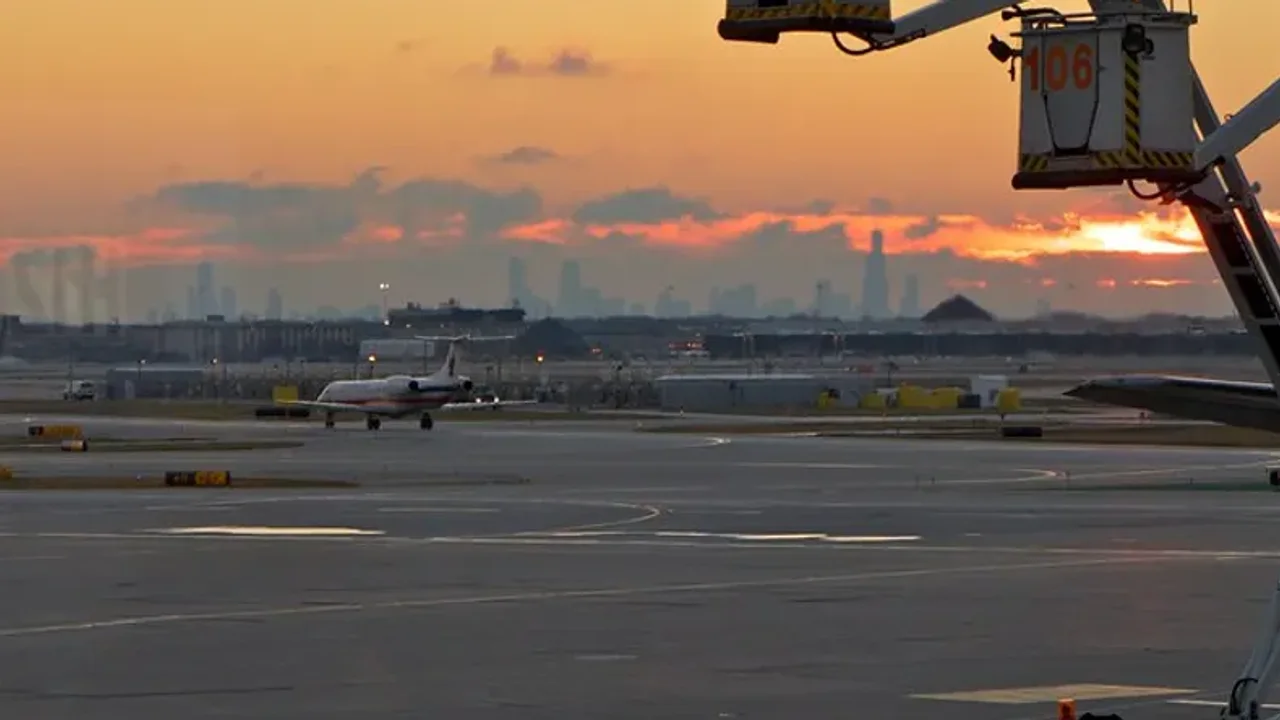
Weather delays private jets less often than airlines, but it still causes delays and cancellations. Snow and frost require de-icing before takeoff, fog can keep an aircraft from landing, strong crosswinds can exceed an aircraft's limits, and thunderstorms can close routes or airports for a time. The pilot in command makes the final call, and the charter contract decides who pays.
Key takeaways
- The pilot in command decides whether a flight can go safely; operators may set stricter limits than the rules.
- No takeoff with ice, frost or snow on critical surfaces, so winter departures often need de-icing.
- Fog and low cloud can stop an aircraft from starting an approach at its destination.
- Thunderstorms are avoided by wide margins, which can mean delays or diversions.
- Read the weather clause in your contract; it decides refunds and extra costs.
Who decides if a flight goes ahead?
The pilot in command. Under 14 CFR 91.3, the pilot in command of an aircraft is directly responsible for, and is the final authority as to, the operation of that aircraft. Charter operators also have their own operating limits, which can be more conservative than the regulations, and dispatchers or operations staff who monitor the weather.
That is a strength of a well-run charter operation. A crew that delays or diverts for weather is doing its job, and pressure to "just go" is one of the warning signs of a poorly run flight. If a crew delays for weather, the best response is to work with them on the next option.
Why de-icing delays winter departures
Because no aircraft may take off with ice on critical surfaces. Under 14 CFR 135.227, no pilot may take off an aircraft that has frost, ice or snow adhering to its wings, control surfaces, propellers, windshield, engines or key instruments. When frost, ice or snow may reasonably be expected to adhere, the operator must complete an approved pretakeoff contamination check within five minutes before takeoff, follow an approved alternative procedure, or use an approved de-icing and anti-icing program.
In practice, a snowy or frosty morning means:
- De-icing fluid sprayed on the aircraft before departure, often at the FBO or a de-icing pad.
- Queues for de-icing trucks at busy airports, which can add time.
- A time limit. Anti-icing fluid only protects the aircraft for a limited time, so long taxi delays may mean de-icing again.
- A charge on the invoice. De-icing is usually billed at cost, and it can be significant on larger aircraft; see charter fees explained.
A heated hangar overnight can avoid frost and snow on the aircraft, which saves time the next morning. Ask whether hangar space is available and what it costs. Our guide to private jet airports near Chicago covers winter planning in a snowy city.
The same rule also limits flying into icing conditions. An aircraft may fly into known or forecast light or moderate icing only if it has the required ice protection equipment or certification, which is one reason some smaller aircraft are grounded or rerouted on icy days.
Fog, low cloud and visibility
Low cloud and fog can stop a flight from landing, even when the departure airport is clear. Charter flights must meet instrument approach and landing minimums. Under 14 CFR 135.225, no pilot may begin an instrument approach unless the latest weather report for the airport shows conditions at or above the authorized landing minimums, with some exceptions for eligible on-demand operations.
What this means for you:
- Morning fog is common at some coastal and valley airports and often lifts by late morning; see the fog section in our guide to private jet airports near San Francisco.
- Smaller airports may have higher minimums than large airports with more advanced approach systems.
- An alternate airport is part of the planning, so a flight may divert if the destination stays below minimums.
Crosswinds and strong winds
Every aircraft has crosswind limits. Aircraft flight manuals publish a demonstrated crosswind value, and operators often set their own limits for their crews and aircraft. When the wind blows strongly across the runway, a smaller aircraft or a short runway with a single direction may not be usable, while a larger airport with several runways may be.
Strong winds also affect:
- Flight times. Headwinds can make long westbound flights much longer than eastbound ones; see how fast private jets fly.
- Range. Strong headwinds may turn a planned nonstop into a fuel stop.
- Turbulence. Gusty winds near mountains can make approaches rough, especially into mountain airports such as Aspen; see private jet charter to Aspen.
Thunderstorms
Thunderstorms are avoided by wide margins. The FAA's advisory circular on thunderstorms, AC 00-24C, tells pilots not to land or take off in the face of an approaching thunderstorm, because a sudden gust front can cause loss of control, and to avoid any thunderstorm identified as severe or giving an intense radar echo by at least 20 miles.
For passengers, that means:
- Waits while a storm passes over or near the airport.
- Reroutes around lines of storms, which can lengthen a flight.
- Air traffic delays when storms reduce the capacity of busy airspace, especially in summer afternoons.
Summer storms are common in Florida, Texas and the Midwest; our guide to private jet airports near Dallas covers storm season there.
Who pays when weather delays or cancels a flight?
Your contract decides. Most charter agreements treat weather as a circumstance outside the operator's control, and the terms vary on:
- Refunds or credits if the flight cannot operate at all.
- Rebooking on a later date or to a different airport.
- Extra costs such as crew overnights, waiting time, de-icing and repositioning.
- Diversions, including ground transport from an alternate airport.
Read these clauses before you book. Our guide to charter contract red flags explains what a good contract should say.
Seasonal weather to plan for
Different seasons bring different risks. A rough guide for US travel:
| Season | Common issues | Where it matters most |
|---|---|---|
| Winter | Snow, ice, frost and de-icing; low visibility | Northeast, Midwest, mountain airports |
| Spring | Thunderstorms, gusty winds, some late snow | Plains, South, Rockies |
| Summer | Afternoon thunderstorms, heat, hurricanes later in the season | Florida, Gulf Coast, Southwest, Caribbean |
| Fall | Early-season hurricanes, first frosts, fog | Gulf and Atlantic coasts, valleys |
Heat matters too. On very hot days, aircraft need more runway and climb more slowly, especially at high-altitude airports. On a long trip from a short runway, the operator may reduce fuel and add a stop, or suggest an early-morning departure when the air is cooler.
Hurricanes can close airports and move aircraft out of harm's way days in advance. If you are traveling to Florida, the Gulf Coast or the Caribbean in hurricane season, check the cancellation terms and keep your dates flexible; see private jets to the Caribbean.
What happens on the day of a weather delay
Expect the crew and broker to keep you informed and offer options. Typically:
- The crew checks the latest forecasts and decides on timing, often a few hours before departure.
- You hear the options: wait at the FBO, move the departure, use a different airport or postpone.
- The FBO helps on the ground with a lounge, food and transport while you wait; see what an FBO is.
- Costs are confirmed if the change adds crew time, an overnight or repositioning.
- Plans are updated in writing, so everyone knows the new departure time and airport.
How to plan around the weather
- Build slack into important trips. Fly the day before a wedding, a board meeting or a cruise departure.
- Prefer morning departures in summer, before afternoon storms build.
- Ask about hangar space for overnight stops in winter.
- Choose airports with options. Larger airports with several runways and better approaches cope with weather more easily.
- Agree on a backup plan with the broker, such as an alternate airport or a later departure.
- Stay reachable on the day, so the crew can update you quickly.
Is flying private better than airlines in bad weather?
Usually more flexible, not immune. An airline delay can ripple through a whole network, while a private flight depends only on its own aircraft, crew and airports. You can often leave as soon as conditions improve, choose a different airport or move the departure without rebooking a connection. But no aircraft can take off with ice on its wings, land below minimums or fly through a severe thunderstorm.
Book with weather in mind
When you request a quote, tell us how firm your timing is and whether an alternate airport would work for you. To estimate the cost of your trip, including the effect of a fuel stop on windy days, use our private jet cost calculator.