

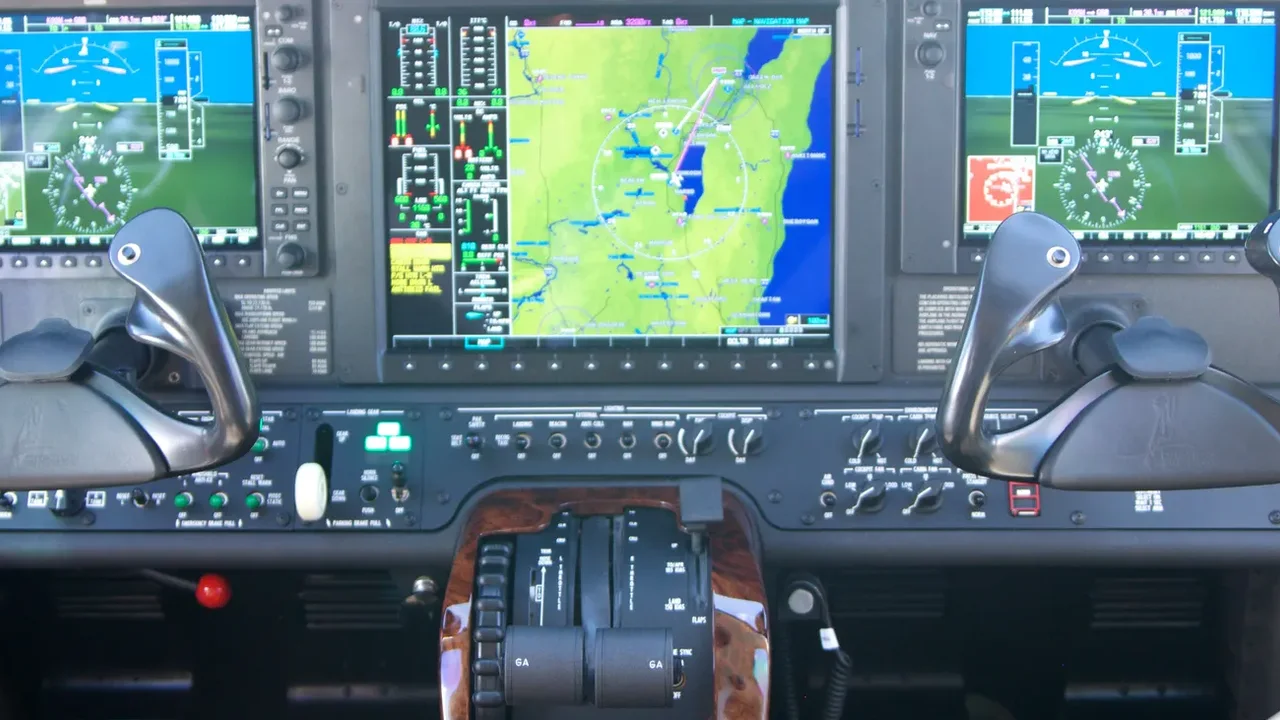
FAA charter rules limit how long pilots can fly. Under 14 CFR 135.267, a two-pilot crew on an unscheduled charter may fly no more than 10 hours in 24 hours, a single pilot no more than 8, and crews must have at least 10 hours of rest. Longer days need an overnight, a fresh crew or a three- or four-pilot crew.
Key takeaways
- Two pilots are standard on business jets: most are certified that way, and charter rules often require it.
- 10 hours of flight time in 24 hours is the limit for a two-pilot crew on an unscheduled charter.
- At least 10 hours of rest must come before the assignment ends.
- Three or four pilots allow up to 12 or 16 hours aloft, with sleeping facilities on board.
- Plan long days with the operator so the crew plan, and its cost, are in the quote.
Why do private jets have two pilots?
Because the aircraft and the rules usually require it. Under 14 CFR 135.99, no charter operator may fly an aircraft with less than the minimum crew in its operating limitations or flight manual, and most business jets are certified for two pilots. The same rule requires a second in command on any aircraft with 10 or more passenger seats.
Under 14 CFR 135.101, a charter flight carrying passengers under instrument flight rules also needs a second in command, except where 14 CFR 135.105 allows an approved autopilot instead. In practice, most jet charters you book will have two pilots.
How long can charter pilots fly?
The limits for unscheduled one- and two-pilot crews are in 14 CFR 135.267:
| Limit | One pilot | Two pilots |
|---|---|---|
| Flight time in any 24 consecutive hours | 8 hours | 10 hours |
| Flight time in a calendar quarter | 500 hours | 500 hours |
| Flight time in two consecutive quarters | 800 hours | 800 hours |
| Flight time in a calendar year | 1,400 hours | 1,400 hours |
The rule also requires:
- At least 10 consecutive hours of rest in the 24 hours before the planned end of an assignment.
- At least 13 rest periods of 24 consecutive hours in each calendar quarter.
- Longer rest after an overrun. If a crew exceeds the daily limit because of circumstances beyond its control, such as bad weather, it needs 11, 12 or 16 consecutive hours of rest depending on how far it went over.
An alternative in the same rule allows flight time within a regularly assigned duty period of no more than 14 hours, preceded and followed by at least 10 hours of rest, with the same 8- and 10-hour flight time limits.
When do you need three or four pilots?
When the flight itself is longer than a two-pilot crew may fly. Under 14 CFR 135.269, operators may use augmented crews:
| Crew | Maximum time aloft | Maximum duty in 24 hours |
|---|---|---|
| Three pilots | 12 hours | 18 hours |
| Four pilots | 16 hours | 20 hours |
Each pilot is limited to 8 hours of flight deck duty in 24 hours, must have at least 10 hours of rest before the assignment and 12 hours after it, and the aircraft must have adequate sleeping facilities for the relief pilot. That is why ultra long range jets have crew rest areas; see ultra long range jets compared.
How crew limits shape real trips
Most trips fit easily. The limits matter on long days and long flights. Some examples, with still-air flight times from our flight time calculator:
| Trip | Flying in one day | Typical crew plan |
|---|---|---|
| New York to Palm Beach and back the same day, light jet | About 5 hours | One two-pilot crew |
| Three-city business day, light or midsize jet | About 3 to 5 hours | One two-pilot crew, if the duty day is not too long |
| New York to Los Angeles and back the same day | About 10 to 11 hours | Overnight, a crew swap or an augmented crew |
| New York to Tokyo nonstop, ultra long range jet | About 12 hours | Augmented crew; over 12 hours aloft means four pilots |
| Two-day roadshow with an overnight | 3 to 6 hours a day | One crew, resting overnight |
For multi-city examples, see our guides to roadshow charter and best private jets for coast-to-coast flights.
Waiting time and long duty days
A day can be long even when the flying is short. Crews report well before departure to prepare the aircraft and plan the flight, and they may wait for hours while you attend meetings, games or events. A long day of waiting followed by a late flight can approach the limits on duty and rest, even if the total flight time is modest.
If your plans include:
- An early departure and a late return,
- Long waits between legs, or
- Uncertain timing, such as a game that may go to overtime,
share the full schedule with the operator when you request quotes. It may plan an overnight, position a second crew or suggest a different departure time.
What crew rules cost
Crew time appears on the quote in a few ways:
- Crew overnights. Our estimator allows about $900 to $1,600 per night for hotels and expenses; see charter fees explained.
- A second crew. Positioning a fresh crew by airline or another aircraft adds travel costs and fees.
- Extra pilots. An augmented crew for long flights adds pilot costs.
- Daily minimums. Many operators bill a minimum of about two flight hours per day the aircraft is away with you.
Use our private jet charter cost calculator to estimate a trip, including overnights.
Do the same limits apply to fractional and private flights?
Fractional programs have similar limits; purely private flights do not use these charter rules.
- Fractional programs operate under Part 91 subpart K. Under 14 CFR 91.1059, program managers face the same core limits as charter operators for one- and two-pilot crews: 8 hours for one pilot and 10 hours for two in any 24 consecutive hours, and the same quarterly and annual totals.
- Charter flights under Part 135 follow 135.267 and 135.269, described above.
- Privately operated flights, such as an owner flying their own aircraft with their own crew, are not charter operations, so the Part 135 flight time limits in this article do not govern them. Many corporate flight departments set their own duty and rest policies.
If you are comparing charter with a jet card or fractional share, see jet card vs charter vs fractional ownership.
When weather pushes a crew over the limit
Delays happen, and the rules allow for them, at a price. If a crew goes over its daily flight time limit because of circumstances beyond its control, such as weather, 135.267 requires a longer rest before its next flight: 11 hours if it went over by up to 30 minutes, 12 hours for up to an hour, and 16 hours for more than an hour.
For you, that can mean a later departure the next morning than planned. If your trip depends on an early start after a long, delayed day, ask whether the operator can position a fresh crew. Our guide to private jet weather delays covers the weather side.
Questions to ask about the crew
- How many pilots will fly the trip, and is the crew based near the departure airport?
- Does my schedule fit the duty and rest limits, including waiting time?
- What happens if we run late, and is a backup crew available?
- Are crew overnights and expenses included in the quote?
- On long flights, is there a crew rest area and an augmented crew?
Why these rules are good for passengers
Rested crews are safer crews. Fatigue is a well-known hazard in aviation, and duty limits exist to keep it in check. The limits apply to every Part 135 operator, whatever the aircraft size or the price of the trip, so a schedule that fits the rules with one operator should fit them with another. A broker or operator who tells you a schedule will not work for the crew is protecting your safety. Be cautious of anyone who promises to "make it work" by stretching a crew beyond the rules; see illegal charter warning signs and our guide to verifying a Part 135 charter operator.
Plan your schedule with the crew in mind
When you request a quote, include every leg, the meeting or event times and any chance of a late return. We will check the crew plan with the operator and show any overnight or extra crew costs on the quote before you book.