

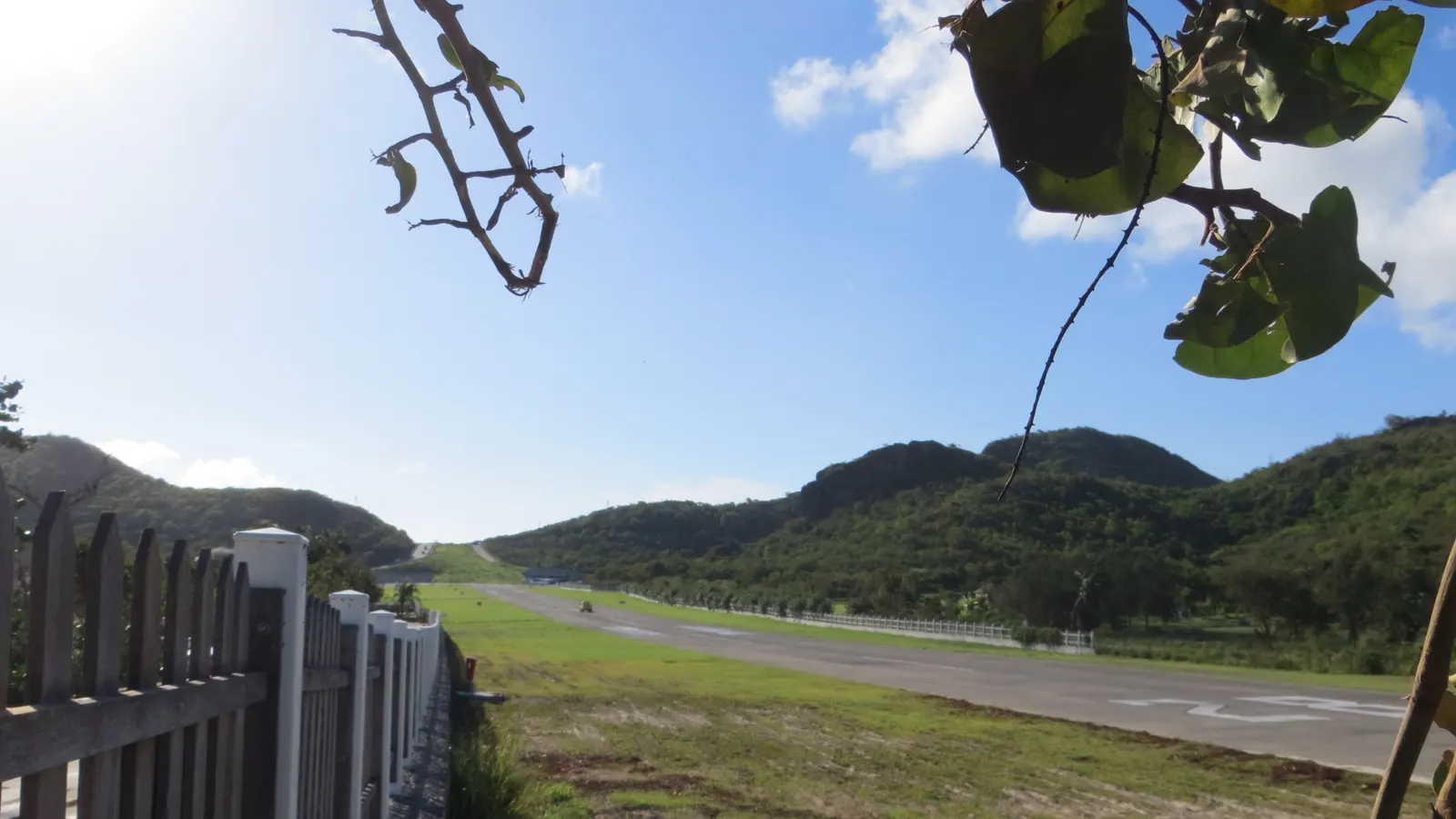
Most Caribbean islands can take a private jet. Nassau, Turks and Caicos, St. Maarten, Antigua, Barbados and St. Lucia all have runways of 7,500 feet or more at international airports that handle customs. The big exception is St. Barts: its 2,120-foot runway is limited to aircraft of 5.7 tonnes or less, so travelers fly a jet to St. Maarten and connect on a small turboprop.
Key takeaways
- The Bahamas is close: about 160 nm from Miami-Opa Locka to Nassau, so even a turboprop or light jet works well.
- Turks and Caicos has a 9,200-foot runway at Providenciales, long enough for heavy jets.
- The Eastern Caribbean (St. Maarten, Antigua, St. Lucia, Barbados) is 1,450 to 1,850 nm from New York, best suited to a midsize or super midsize jet.
- St. Barts cannot take business jets. Fly to St. Maarten and connect on a small turboprop flown by a pilot qualified for the airport.
- Every island outside the US sets its own entry rules. The operator handles permits and manifests; you need passports for everyone.
Which Caribbean islands can you fly a private jet into?
Almost all the main islands have runways long enough for business jets, and their main airports handle customs for international private flights. Distances below are straight-line, in nautical miles.
| Island | Airport | Runway (approx.) | From Teterboro | From Opa-locka |
|---|---|---|---|---|
| Bahamas: Nassau | Lynden Pindling (NAS) | 11,350 ft | 960 nm | 160 nm |
| Bahamas: Exuma | Exuma International (GGT) | 7,050 ft | 1,040 nm | 280 nm |
| Bahamas: Harbour Island | North Eleuthera (ELH) | 6,020 ft | 930 nm | 200 nm |
| Turks and Caicos | Providenciales (PLS) | 9,200 ft | 1,150 nm | 505 nm |
| Grand Cayman | Owen Roberts (GCM) | 7,870 ft | 1,350 nm | 400 nm |
| St. Maarten | Princess Juliana (SXM) | 7,550 ft | 1,480 nm | 1,065 nm |
| Antigua | V.C. Bird (ANU) | 9,000 ft | 1,560 nm | 1,160 nm |
| St. Lucia | Hewanorra (UVF) | 9,000 ft | 1,770 nm | 1,310 nm |
| Barbados | Grantley Adams (BGI) | 11,000 ft | 1,840 nm | 1,400 nm |
| St. Barts | Gustaf III (SBH) | 2,120 ft | Jets cannot land | Jets cannot land |
Runway lengths are rounded from the open OurAirports dataset and agree with official figures where we checked them: the Turks and Caicos Islands Airports Authority lists Providenciales at 9,200 x 150 ft, and the French aeronautical publication lists St. Barts at 646 meters. Runway length is only a starting point: the operator also checks weight, weather and the aircraft's performance for each trip.
Why can't private jets land at St. Barts?
St. Barts' runway is too short and too weak for business jets. The French aeronautical information publication for St. Barts (October 2026 edition) lists:
- Runway: 646 x 18 meters (about 2,120 x 60 feet), concrete.
- Weight limit: the pavement is limited to a maximum takeoff weight of 5.7 tonnes (about 12,500 lb). That is well below the weight of typical charter jets such as the Phenom 300 or Challenger 350, and the runway is far shorter than business jets normally need.
- Direction: takeoffs toward the west (runway 28) are prohibited.
- No night landings: landings in either direction are prohibited at night. Night takeoffs are allowed only for authorized medical evacuation flights.
- Restricted use: the airport is approved only for restricted use under a French ministerial order, most recently amended in April 2026.
Pilots also need a special qualification to fly into St. Barts, as AIN has reported. The approach comes over a hill and down to a runway that ends at the beach.
How to get there: fly your private jet to Princess Juliana Airport on St. Maarten, about 17 nm away, and connect on a small turboprop such as a Pilatus PC-12 or a Twin Otter flown by a pilot qualified for St. Barts. The hop takes minutes. Your broker can book the connection to meet your jet, so you transfer on the ramp rather than through the terminal where possible. Ferries also run between the islands.
Because there are no night landings, plan to arrive at St. Maarten with daylight to spare, especially in December, when the sun sets early.
The Bahamas: the easiest island trip by private jet
The Bahamas is the closest Caribbean destination to the US mainland and one of the easiest by private aircraft. Nassau is about 160 nm from Opa-locka and 960 nm from Teterboro in a straight line, within the range of light jets from both.
- Nassau (NAS) has two long runways (the longer is about 11,350 feet) and is the main entry point for the country.
- Exuma (GGT) and North Eleuthera (ELH), the airport for Harbour Island, have runways of about 7,050 and 6,020 feet, fine for light and midsize jets. Harbour Island itself is a short water taxi ride from North Eleuthera.
- The Out Islands have many short strips. A turboprop is often the right aircraft for them, and from Florida it can be cheaper than a jet.
The Bahamas handles private aircraft entry online, and the operator files it. Our guide to flying a private jet internationally explains the process.
Turks and Caicos and Grand Cayman
Both have long runways and are well within reach from Florida.
- Turks and Caicos: Providenciales has a 9,200-foot runway, extended in 2011 according to the airports authority, so even heavy jets can use it. It is about 505 nm from Opa-locka and 1,150 nm from Teterboro.
- Grand Cayman: Owen Roberts International has a runway of about 7,870 feet, about 400 nm from Opa-locka.
From the Northeast, a light jet with a full cabin may be close to its range limit on the Turks and Caicos route, especially into headwinds. A midsize jet or larger flies it nonstop comfortably.
St. Maarten, Antigua, St. Lucia and Barbados
The Eastern Caribbean is 1,450 to 1,850 nm from New York, so the aircraft class matters. All four islands have runways of about 7,500 feet or more.
- St. Maarten (SXM): about 7,550 feet, and the gateway to St. Barts and Anguilla.
- Antigua (ANU): about 9,000 feet.
- St. Lucia (UVF): Hewanorra, in the south of the island, has about 9,000 feet. It can be a long drive to resorts in the north.
- Barbados (BGI): about 11,000 feet, the longest of the group.
From Teterboro, Barbados is about 1,840 nm in a straight line. That is beyond the comfortable range of most light jets with passengers and bags, so a super midsize jet or a midsize jet with good range is the usual choice. From Florida, the same trips are about 400 to 450 nm shorter.
Smaller islands such as Anguilla (about 5,460 feet) and Mustique (about 3,250 feet) have shorter runways that limit aircraft size. Like St. Barts, they are typically served by small aircraft. Ask the operator before you plan around a specific jet.
Puerto Rico and the US Virgin Islands
Puerto Rico and the US Virgin Islands are US territories, but the US Virgin Islands are treated differently for customs.
- Puerto Rico: San Juan (SJU) has runways of about 10,000 and 8,000 feet. Flights between Puerto Rico and the mainland are domestic for customs purposes.
- US Virgin Islands: St. Thomas (STT) has a 7,000-foot runway. Under 19 CFR 122.144, aircraft leaving the US Virgin Islands for the mainland follow departure rules similar to those for foreign flights. CBP's St. Thomas fact sheet also requires an agriculture inspection before departure.
The operator arranges these steps, but allow time for them before your return flight.
Customs and paperwork for a Caribbean charter
Each island government sets its own rules, and the operator handles most of the paperwork. What it usually involves:
- Passports for every passenger, valid for the trip, plus any visas your nationality needs.
- Entry permits and declarations for each island. Some countries require advance permission for charter flights; others use online systems.
- A CBP eAPIS manifest for every departure from and arrival in the US, filed by the operator before departure.
- A first US landing at a customs airport on the way home. Florida's business aviation airports, such as Opa-locka and Fort Lauderdale Executive, are common choices; see our guide to private jets to Miami.
- Taxes and fees: island departure taxes and US international arrival and departure taxes apply. The charter tax calculator estimates the US side.
Send passport details early and do not change passengers at the last minute, because the manifest must match who boards.
When to go and how early to book
The winter season, from December to April, is the busiest time, peaking from Christmas to New Year and around Presidents' Day weekend. During those weeks:
- Book early. For Christmas and New Year, request quotes in early fall. The connecting turboprops to St. Barts fill up as fast as the jets.
- Ask about parking. Popular island airports have limited ramp space, and an aircraft may drop you off and reposition to another island or back to the US. Ask which the quote assumes.
- Be flexible on dates. Flying a day before or after the peak can widen the choice of aircraft.
The Atlantic hurricane season runs from June through November. Summer and fall trips are possible, but keep plans flexible and check the forecast with your operator.
How much does a private jet to the Caribbean cost?
The cost depends mostly on the aircraft class and the distance from your departure airport. Typical US on-demand rates per flight hour, before taxes and fees:
| Class | Typical hourly rate | Typical Caribbean trips |
|---|---|---|
| Turboprop | $2,000–3,400 | Florida to the Bahamas and the Out Islands |
| Light jet | $4,000–5,900 | Florida to Turks and Caicos, Cayman; New York to Nassau |
| Midsize jet | $5,000–7,200 | New York to Turks and Caicos, St. Maarten |
| Super midsize jet | $6,500–9,800 | New York to Antigua, St. Lucia, Barbados |
These are typical ranges; quotes vary with season, availability and positioning. Most Caribbean trips are round trips with a stay of several days, so ask whether it is cheaper for the aircraft to wait on the island or fly home and return. Use the flight time calculator and the private jet charter cost calculator to estimate your trip, and ask about empty legs heading south before the holidays.
Planning your trip
The Caribbean is one of the most rewarding private jet trips from the US, and the planning comes down to three things: the right aircraft for the distance and runway, passports and permits handled early, and realistic timing around island daylight and holiday peaks. Tell us your island, dates, group size and luggage, and request a quote. We will match you with an operator and aircraft that fit the trip, including the connection to St. Barts if you need one.