

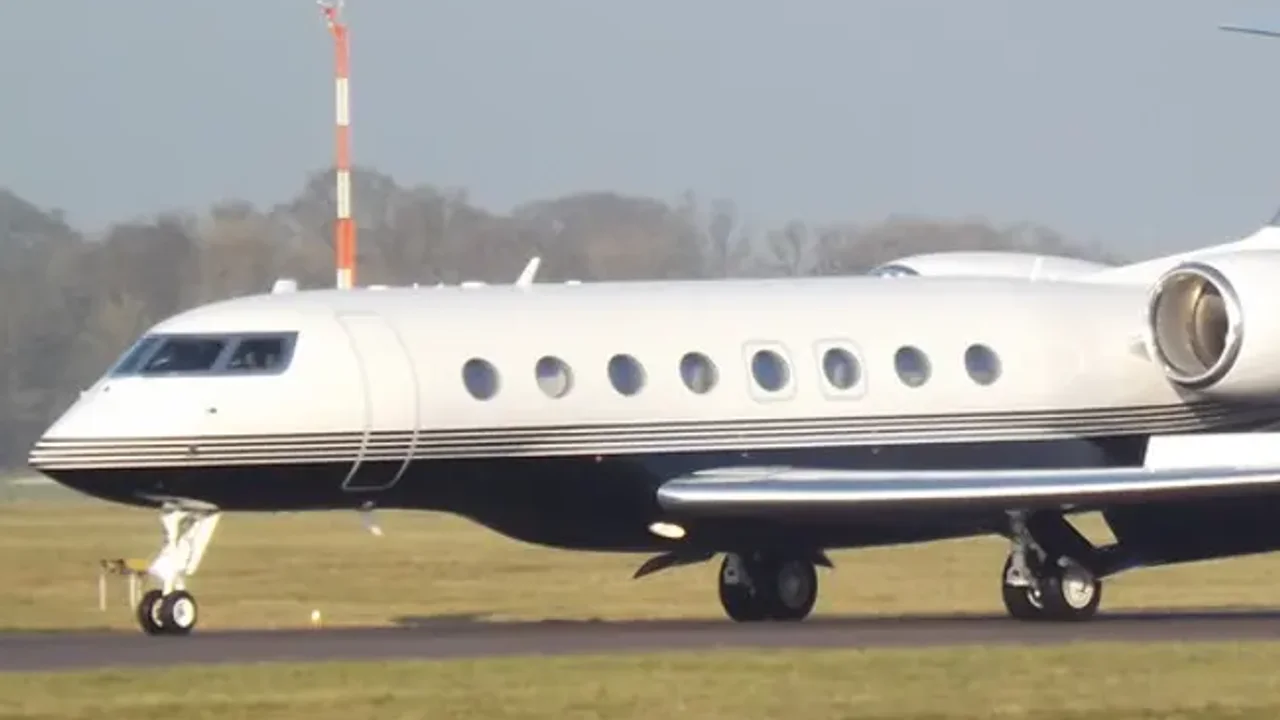
The Bombardier Global 7500, Gulfstream G650ER and Dassault Falcon 8X are the ultra long range jets most often offered for intercontinental charter. All three seat about 12 to 16 passengers. The Global 7500 and G650ER can fly routes such as New York to Tokyo nonstop, about 12 hours in still air. The Falcon 8X has less range but can use shorter runways.
Key takeaways
- Range: about 7,700 nm for the Global 7500, 7,500 nm for the G650ER and 6,450 nm for the Falcon 8X.
- New York to Tokyo or Dubai nonstop: usually the Global 7500 or G650ER; the Falcon 8X typically stops.
- Speed is similar: the Global 7500 and G650ER cruise near 516 knots in our data, the Falcon 8X near 488.
- Long flights need bigger crews. Flights over 10 hours need three or four pilots under FAA charter rules.
- Rates run about $11,000 to $17,500 per flight hour before taxes and fees.
How do the ultra long range jets compare?
Key figures from the aircraft data behind our tools, which uses rounded manufacturer specifications:
| Aircraft | Typical seats | Range | Cruise speed | Cabin height | Baggage |
|---|---|---|---|---|---|
| Bombardier Global 7500 | 14 | ~7,700 nm | ~516 kts | 6.2 ft | 195 cu ft |
| Gulfstream G650ER | 14 | ~7,500 nm | ~516 kts | 6.4 ft | 195 cu ft |
| Dassault Falcon 8X | 14 | 6,450 nm | ~488 kts | 6.2 ft | 140 cu ft |
Dassault publishes the detail for the Falcon 8X: a range of 6,450 nm at Mach 0.80 with 8 passengers and 3 crew and NBAA IFR reserves, a maximum operating speed of Mach 0.90, a certified ceiling of 51,000 feet, a cabin 6 feet 2 inches high and 7 feet 8 inches wide, and a takeoff distance of 5,880 feet at maximum takeoff weight. Our tools' data describes the Global 7500 as having four living spaces and a dedicated crew rest area.
Which jet flies farthest?
The Global 7500, closely followed by the G650ER. Our tools plan with 85% of published range to allow for real conditions:
| Aircraft | Published range (our data) | Planning range |
|---|---|---|
| Global 7500 | ~7,700 nm | ~6,545 nm |
| G650ER | ~7,500 nm | ~6,375 nm |
| Falcon 8X | 6,450 nm | ~5,480 nm |
That margin decides which long routes are nonstop. Our guide to how far a private jet can fly explains how range is calculated, and the range explorer maps any departure.
Which routes can each jet fly nonstop?
Estimated still-air flight times on long routes, with whether the trip fits within the planning range:
| Route | Distance | Global 7500 | G650ER | Falcon 8X |
|---|---|---|---|---|
| Teterboro to Paris (Le Bourget) | 3,150 nm | 6 h 44 min | 6 h 44 min | 7 h 06 min |
| Teterboro to São Paulo | 4,155 nm | 8 h 47 min | 8 h 47 min | 9 h 16 min |
| Van Nuys to London (Farnborough) | 4,720 nm | 9 h 55 min | 9 h 55 min | 10 h 29 min |
| Teterboro to Tokyo (Haneda) | 5,855 nm | 12 h 15 min | 12 h 15 min | Usually a stop |
| Teterboro to Dubai | 5,940 nm | 12 h 25 min | 12 h 25 min | Usually a stop |
| Van Nuys to Hong Kong | 6,285 nm | 13 h 07 min | 13 h 07 min | Usually a stop |
| Van Nuys to Sydney | 6,515 nm | 13 h 36 min | Borderline | Stop |
| Teterboro to Hong Kong | 6,990 nm | Usually a stop | Usually a stop | Stop |
Winds change the picture on the day. Westbound flights over the Pacific and polar routes are especially sensitive to headwinds, and the operator decides whether a flight can go nonstop given the passengers, bags, weather and reserves. For Europe, see flying a private jet to Europe from the US.
Why do long flights need more pilots?
Because FAA charter rules limit how long a crew can fly. Under 14 CFR 135.267, a two-pilot crew on an unscheduled charter may not fly more than 10 hours of flight time in 24 hours. Longer flights need an augmented crew. Under 14 CFR 135.269:
- A three-pilot crew may be aloft no more than 12 hours, within 18 duty hours.
- A four-pilot crew may be aloft no more than 16 hours, within 20 duty hours.
- No pilot may do more than 8 hours of flight deck duty in 24 hours.
- The aircraft must have adequate sleeping facilities for the relief pilot.
That is one reason ultra long range jets have crew rest areas, and why a 12-hour flight such as New York to Tokyo may need a four-pilot crew. Extra pilots add to the cost, so ask whether your quote includes the crew the trip needs.
How do the cabins compare?
All three have stand-up cabins and space for sleeping on long flights, but they differ in size and layout.
- Global 7500: four living spaces and a dedicated crew rest area in our data, suited to groups who want separate zones for dining, working and sleeping.
- G650ER: the tallest cabin of the three in our data, at about 6.4 feet, with the same baggage volume as the Global 7500.
- Falcon 8X: Dassault lists a cabin 6 feet 2 inches high and 7 feet 8 inches wide, describes it as the quietest on the market and offers a wide choice of layouts. With a 5,880-foot takeoff distance, it can also reach airports where longer runways are not available.
Layouts, beds, galleys and Wi-Fi depend on the individual aircraft. Ask about the specific tail number and its connectivity; see private jet Wi-Fi.
What about the newer Gulfstreams?
Gulfstream's current lineup has moved on. Its G650ER page now redirects to the G800, which Gulfstream lists with a maximum range of 8,200 nm at Mach 0.85 with 8 passengers and 4 crew, a maximum operating speed of Mach 0.935 and seating for up to 19, with up to four living areas. G650ERs remain in service, and for charter customers the choice depends on which aircraft are available for your dates.
How much does an ultra long range jet cost to charter?
Typical US rates are about $11,000 to $17,500 per flight hour in the aircraft data behind our tools, before taxes and fees. That means:
- A 7-hour transatlantic flight: roughly $77,000 to $122,500 of flying time each way.
- A 12-hour flight to Asia or the Middle East: roughly $132,000 to $210,000 each way.
Add international fees, landing and handling, crew costs for an augmented crew and overnights, and the aircraft's return if you fly one way. Our private jet charter cost calculator estimates the full trip, and our guide to international private jet travel covers customs and permits.
Ultra long range or heavy jet: is the extra range worth it?
Only when your trip needs it. Typical figures from the aircraft data behind our tools:
| Class | Typical seats | Typical range | Typical hourly rate |
|---|---|---|---|
| Heavy jets | 10–16 | 3,400–6,000 nm | $8,500–$13,000 |
| Ultra long range jets | 12–17 | 6,000–7,700 nm | $11,000–$17,500 |
A long-range heavy jet such as the Falcon 7X, listed at about 5,950 nm in our data, covers most transatlantic trips nonstop. For New York to London or Paris, it usually does the job at a lower hourly rate than an ultra long range jet.
The extra range pays off when the alternative is a fuel stop: New York to Tokyo or Dubai, the West Coast to Asia, or the US to Australia. A stop adds a landing, time on the ground and another climb and, on long overnight trips, can interrupt sleep. For a group that wants to arrive rested, the nonstop is often worth the higher rate.
Which ultra long range jet should you choose?
- Asia, the Middle East or Australia nonstop from the US: the Global 7500 or G650ER, and confirm the operator expects a nonstop on your date.
- Europe or South America: any of the three; the Falcon 8X is often a good fit.
- Shorter runways: the Falcon 8X.
- Separate living zones for a group: the Global 7500.
- The best price: quote several models, because availability and positioning often matter more than the model.
If you do not need intercontinental range, a heavy jet is often better value; see light vs midsize vs heavy jets.
Get quotes for a long-range trip
Request a quote with your route, dates, group size and baggage. We will compare long-range aircraft from certificated operators, name each aircraft and operator, and confirm the crew plan and whether a fuel stop is likely.