

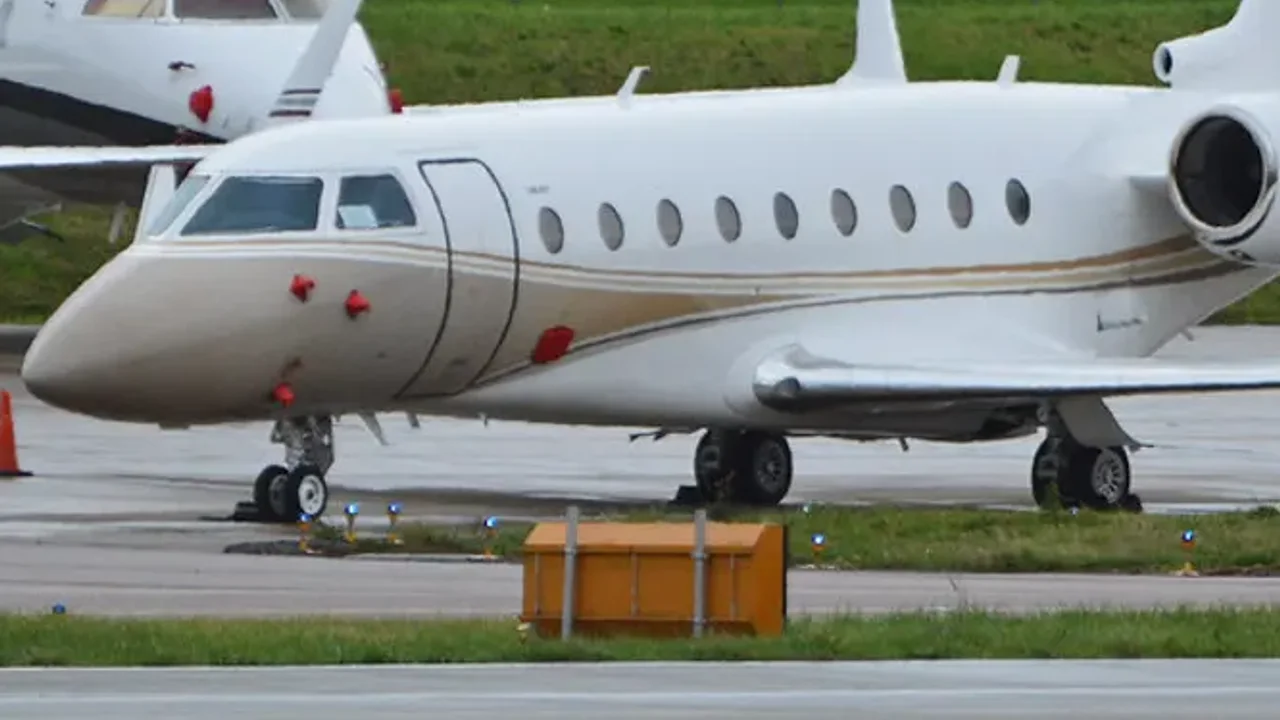
The Challenger 350, Citation Longitude, Praetor 600 and Gulfstream G280 are the super midsize jets you are most likely to be offered for charter. All four seat about 8 to 10 passengers, cruise near 460 to 480 knots and fly coast to coast nonstop. The Praetor 600 and G280 have the most range, the Longitude is the fastest, and the Challenger 350 is the benchmark of the class.
Key takeaways
- All four fly US coast to coast nonstop, in about 5 hours in still air.
- Range differs most: about 3,200 nm for the Challenger 300/350 up to about 4,018 nm for the Praetor 600 in our tools' data.
- Transatlantic is the dividing line. The Praetor 600 and G280 can usually fly New York to London nonstop; the others may need a stop.
- Cabins are similar: stand-up height near 6 feet, flat floors on many models, and room for 8 to 10.
- Pick the specific aircraft, not just the model. Age, interior and Wi-Fi vary from jet to jet.
How do the super midsize jets compare?
Key figures from the aircraft data behind our tools, which uses rounded manufacturer specifications:
| Aircraft | Typical seats | Range | Cruise speed | Cabin height | Baggage |
|---|---|---|---|---|---|
| Bombardier Challenger 300/350 | 9 | ~3,200 nm | ~459 kts | 6.1 ft | 106 cu ft |
| Cessna Citation Longitude | 9 | 3,500 nm | 483 kts | 6.0 ft | 112 cu ft |
| Gulfstream G280 | 9 | ~3,600 nm | ~482 kts | 6.25 ft | 154 cu ft |
| Embraer Praetor 600 | 9 | ~4,018 nm | ~466 kts | 6.0 ft | 155 cu ft |
Manufacturers publish the details. Cessna lists the Citation Longitude at a maximum range of 3,500 nm, a maximum cruise speed of 483 knots, up to 12 occupants, a cabin 72 inches high, 77 inches wide and 25 feet 2 inches long, and a takeoff field length of 4,810 feet. Published ranges assume light loads and reserves, so real-world range with a full cabin is lower.
Which super midsize jet has the most range?
The Praetor 600, then the G280. Range matters most for transatlantic trips, Hawaii and flights into strong headwinds. Our tools plan with 85% of published range to allow for real conditions:
| Aircraft | Published range (our data) | Planning range |
|---|---|---|
| Challenger 300/350 | ~3,200 nm | ~2,720 nm |
| Citation Longitude | 3,500 nm | ~2,975 nm |
| Gulfstream G280 | ~3,600 nm | ~3,060 nm |
| Praetor 600 | ~4,018 nm | ~3,415 nm |
That planning margin decides whether a trip is nonstop. See how far a private jet can fly for how range is calculated, and try the range explorer to map any departure.
Coast to coast and transatlantic: which jets fly nonstop?
Estimated still-air flight times on popular long routes, with whether the trip fits within the planning range:
| Route | Distance | Challenger 350 | Longitude | G280 | Praetor 600 |
|---|---|---|---|---|---|
| Teterboro to Van Nuys | 2,130 nm | 5 h 11 min | 4 h 56 min | 4 h 57 min | 5 h 07 min |
| Miami (Opa-locka) to Van Nuys | 2,035 nm | 4 h 58 min | 4 h 44 min | 4 h 45 min | 4 h 54 min |
| Van Nuys to Honolulu | 2,220 nm | 5 h 23 min | 5 h 08 min | 5 h 08 min | 5 h 18 min |
| Teterboro to London (Farnborough) | 2,985 nm | Usually a stop | Borderline | 6 h 49 min | 7 h 03 min |
| Teterboro to Paris (Le Bourget) | 3,150 nm | Stop | Stop | Usually a stop | 7 h 25 min |
Two caveats:
- Wind changes everything. Westbound winter flights face strong headwinds; on some days even a coast-to-coast trip needs a fuel stop. Eastbound transatlantic flights often benefit from tailwinds.
- The operator decides. Range on the day depends on passengers, bags, weather, alternates and reserves. Hawaii trips are overwater, so operators plan them conservatively.
For more on transatlantic trips, see flying a private jet to Europe from the US.
How do the cabins compare?
All four offer stand-up cabins near 6 feet high, comfortable seats for 8 to 10 and room to walk around, which is the main step up from midsize jets.
- Challenger 300/350: the benchmark super midsize cabin for US coast-to-coast trips, with a flat floor. Bombardier's current version is the Challenger 3500.
- Citation Longitude: Cessna lists a cabin 77 inches wide and over 25 feet long, with seating for up to 12.
- Gulfstream G280: the tallest cabin of the four in our data, at about 6.25 feet, and a large baggage space.
- Praetor 600: a cabin similar in height to the Longitude, with the largest baggage space in our data.
Wi-Fi, galleys, lavatories and seating layouts depend on the individual aircraft and its age. When you compare quotes, ask about the specific tail number, its interior and its connectivity; see private jet Wi-Fi.
What about the new Gulfstream G300?
Gulfstream announced the G300 in September 2025 as the G280's replacement, according to AOPA, which reported that the company would not commit to an entry-into-service year. Gulfstream lists the G300 with a maximum range of 3,600 nm at Mach 0.80, seating for up to 10 and a takeoff distance of 4,780 feet, and notes that the figures are based on preliminary data and subject to change.
For charter customers, nothing changes yet: G280s remain in service, and the G300 will appear in charter fleets only after it is certified and delivered.
How much does a super midsize jet cost to charter?
Typical US rates are about $6,500 to $9,800 per flight hour in the aircraft data behind our tools, before taxes and fees. The model matters less than the specific aircraft, its age, the operator and where it is based.
As a rough guide, a 5-hour coast-to-coast flight is about $32,500 to $49,000 of flying time each way. Add taxes, fees, crew overnights on multi-day trips and, for one-way trips, the aircraft's empty return. Our private jet cost calculator estimates the full trip, and light vs midsize vs heavy jets shows how the classes compare.
Super midsize vs midsize vs heavy: when to step up or down
The super midsize class sits between two others, and the right choice depends on distance and group size. Typical figures from the aircraft data behind our tools:
| Class | Typical seats | Typical range | Typical hourly rate |
|---|---|---|---|
| Midsize jets | 7–9 | 1,800–2,900 nm | $5,000–$7,200 |
| Super midsize jets | 8–10 | 3,100–4,000 nm | $6,500–$9,800 |
| Heavy jets | 10–16 | 3,400–6,000 nm | $8,500–$13,000 |
Step down to a midsize jet for trips of up to about three or four hours with a smaller group, such as New York to Florida or Chicago to the Rockies. You save on the hourly rate and lose little comfort on a shorter flight.
Stay with a super midsize for coast-to-coast trips, Hawaii, groups of eight to ten, or when you want a stand-up cabin and more baggage space without paying heavy jet rates.
Step up to a heavy jet for groups larger than about ten, nonstop flights to continental Europe, or long trips where you want separate cabin zones and more space to rest.
Questions to ask about the specific aircraft
Two jets of the same model can feel very different, so ask about the aircraft on your quote:
- Year of manufacture and last interior refurbishment.
- Seating layout, including how many seats face forward and whether there is a divan that converts to a bed.
- Wi-Fi system and whether it works on your route.
- Galley and lavatory, especially on longer trips.
- Baggage space, including whether the hold can be reached in flight.
- Whether a fuel stop is expected on your date, given the forecast winds.
Which super midsize jet should you choose?
- Coast to coast or Hawaii: any of the four. Choose on price, availability, cabin and the specific aircraft.
- New York to London nonstop: ask for a Praetor 600 or G280, and confirm the operator expects to fly it nonstop on your date.
- Continental Europe nonstop: the Praetor 600 has the best chance; otherwise consider a heavy jet.
- Lots of luggage or skis: the Praetor 600 and G280 have the largest baggage spaces in our data.
- Lowest price: let the market decide. Ask for quotes on several models, because availability and positioning often matter more than the model.
Get quotes on several models
When you request a quote, give your route, dates, group size and baggage. We will compare super midsize aircraft from certificated operators, name each aircraft and operator, and tell you whether your trip is likely to need a fuel stop.